Hudson's Bay currant
Ribes hudsonianum
Description
The Hudson's Bay currant (Ribes hudsonianum) is a deciduous shrub that belongs to the Grossulariaceae family. It is a native North American species, widely recognized for its resilience in cold climates and its role as a significant wild food source within its natural range across the northern United States and Canada.
Regarding its geographical origin, this species thrives in subarctic and temperate environments. It is predominantly found in moist habitats, such as riverbanks, riparian forests, and swamp margins. Its ecological adaptation to these high-moisture environments distinguishes it from many other commercial currant varieties that require better-drained, less water-logged soils.
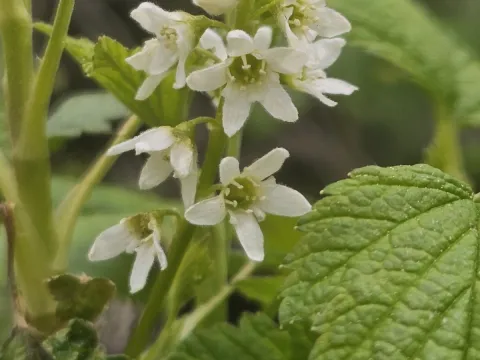
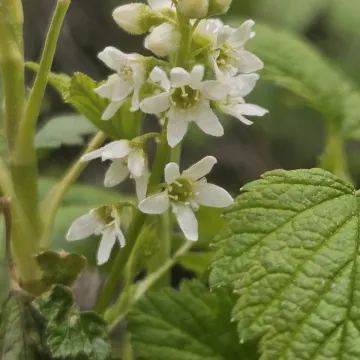
Botanically, the plant grows as an upright shrub reaching up to 1.5 meters in height. The foliage is distinct, often emitting a strong odor when crushed, which is a characteristic feature of several Ribes species. The flowers are small, arranged in racemes, and develop into smooth, black, edible berries that are rich in antioxidants and traditional nutritional compounds.
Cultivation requirements for this species are centered on soil moisture management and organic matter levels. Because the plant is native to swampy or riverside areas, it performs best in soils that are consistently moist throughout the growing season. In a garden setting, it requires supplemental irrigation if rainfall is insufficient, particularly during the fruit development stage.
- Site selection with partial shade and rich, moist soil.
- Annual application of organic mulch to keep root zones cool.
- Pruning to maintain open canopy for better airflow.
- Monitoring soil pH levels to ensure optimal nutrient availability.
Economically, the fruit is traditionally harvested for local food production, particularly in preserves, jams, and jellies. Potential pests and diseases include typical currant pathogens such as powdery mildew and leaf spot. Effective management relies on proper spacing of plants to improve air circulation and periodic scouting to identify signs of pest infestation or fungal growth early in the season.
Photo gallery