Idaho currant
Ribes irriguum
Description
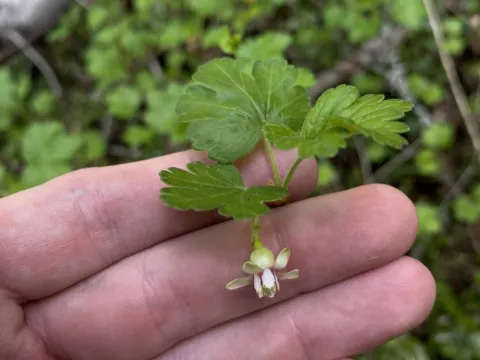
The Idaho currant (Ribes irriguum) is a perennial deciduous shrub belonging to the Grossulariaceae family. This species is native to the western parts of North America, where it thrives in specific ecological niches characterized by consistent moisture and moderate temperatures.
Geographically, this species is primarily found in the states of Idaho, Oregon, and Nevada. It grows naturally in mountainous canyons, along riverbanks, and in thickets where the substrate provides a steady supply of groundwater. This preference for moist soils is the origin of its scientific epithet, irriguum.
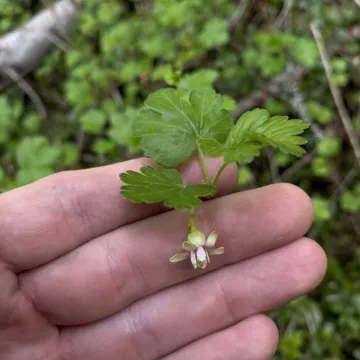
Botanically, Ribes irriguum is distinguished by its upright growth habit and the presence of thorns on its branches. The leaves are palmately lobed, while the flowers, blooming in early spring, exhibit a delicate appearance ranging from pale green to pinkish. The berries are typically dark purple or black, often coated with a glaucous bloom, and are recognized for their culinary potential.
Regarding cultivation requirements, the Idaho currant favors cool climates and well-drained, nutrient-rich soils. While it appreciates moisture, it is essential to avoid waterlogged conditions that can cause root rot. In garden settings, providing partial shade during the hottest part of the day can help maintain the plant's vigor and promote consistent berry production.
- Consistent irrigation during dry spells.
- Neutral to slightly acidic soil composition.
- Strategic pruning to remove old wood.
- Organic mulching for root moisture retention.
The horticultural and agricultural applications of this plant include both landscape design and berry harvesting. As a decorative shrub, it is valued for its hardiness and naturalistic look. When harvested, the fruit is traditionally used in jams, syrups, and fresh consumption, offering a unique flavor profile typical of native wild currants found in the North American West.
Common health challenges for this species include susceptibility to mildew and specific types of rust. Pest pressure may come from aphids and spider mites, particularly if the plant is under stress from drought or poor airflow. Maintaining plant health through proper spacing and regular sanitation is the most effective strategy for managing these issues in both natural and cultivated environments.
Photo gallery