Manchurian currant
Ribes mandshuricum
Description
Manchurian currant (Latin Ribes mandshuricum) is a perennial deciduous shrub belonging to the Grossulariaceae family. The plant typically reaches a height of up to 2 meters and develops a spreading crown. It is highly valued for its extreme hardiness and ability to thrive in cold climates where traditional garden varieties might struggle to survive.
The native range of this species is centered in the Russian Far East, Northeast China, and the Korean Peninsula. In its natural habitat, it is commonly found in mixed temperate forests, often clustering near riverbanks and streams where the soil remains consistently moist and rich in leaf litter and humus.
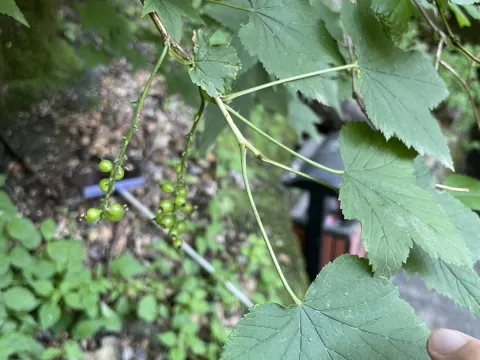
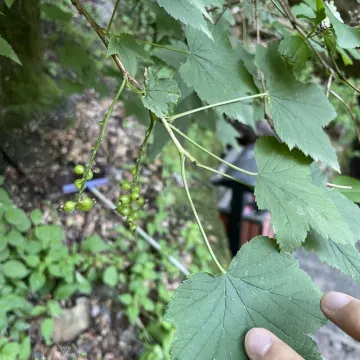
Botanically, the plant is characterized by large, three-to-five-lobed leaves that feature fine hairs on the undersides. Its flowering period occurs in late spring, producing yellow-green racemes. The fruit are small, dark-colored berries that turn black when fully ripe. While less sweet than cultivated blackcurrants, they possess a distinct, sharp aroma and a unique chemical profile.
Cultivation requirements involve selecting a site with partial shade, as intense direct sunlight can scorch the foliage. The soil should be fertile, slightly acidic to neutral, and well-draining. Moisture management is critical; consistent irrigation is necessary during the fruit-set period. Applying organic mulch is highly recommended to regulate soil temperature and conserve moisture around the shallow root system.
The economic and practical uses of the Manchurian currant focus on its role as a hardy parent plant for breeding programs aimed at developing disease-resistant and frost-tolerant hybrids. Beyond breeding, the berries are used in local culinary traditions for jams and preserves, while the shrub itself serves as a robust ornamental plant in landscape design projects and reforestation efforts.
- Requires well-drained, nutrient-rich soil.
- Prefers partial shade or dappled sunlight.
- Sensitive to extreme drought and prolonged waterlogging.
- Requires annual pruning for canopy health.
Pests and diseases common to this species include powdery mildew and anthracnose, which are particularly prevalent in regions with high humidity. Insect pests such as aphids and spider mites can also impact foliage health. To mitigate these risks, growers should ensure proper plant spacing to facilitate airflow and implement integrated pest management strategies, including the removal of dead or infected branches.
Photo gallery