Marshall's currant
Ribes marshallii
Description
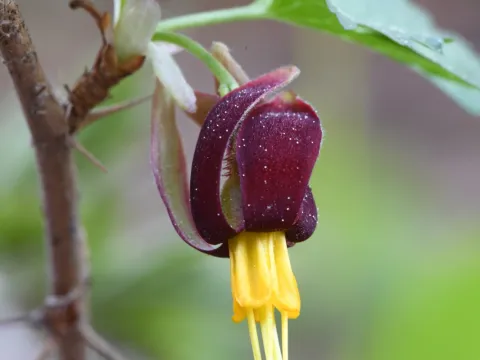
Marshall's currant (Ribes marshallii) is a distinct species of shrub belonging to the Grossulariaceae family. It is native to the western parts of North America, specifically occurring in the mountain forests of California and Oregon. As an endemic plant, it is recognized more for its botanical uniqueness and ecological adaptation to high-altitude environments than as a mass-market agricultural commodity.
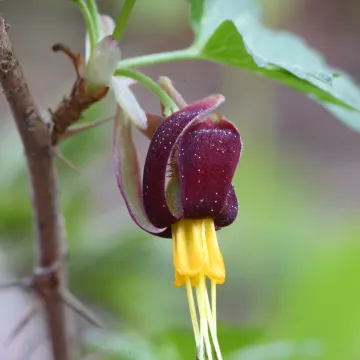
Botanically, this shrub is characterized by having spines on its young stems and striking dark purple or reddish flowers, which distinguish it from the common garden currant varieties. The foliage follows the typical palmate structure common to the Ribes genus. While the plant produces small, edible berries, they do not hold significant economic value for commercial fruit production due to their limited yield and intense, niche flavor profile.
In terms of cultivation, Ribes marshallii requires specific environmental conditions mirroring its native woodland habitat. It thrives in cool, moist climates with well-drained, humus-rich soil. It is particularly sensitive to extreme heat and drought, necessitating a shaded location and consistent moisture levels. Gardeners or researchers attempting to cultivate it should prioritize mulching to keep the root zone cool and protected from temperature fluctuations.
Agrotechnical management is primarily focused on preserving the health of the individual plant. Regular pruning is necessary only for sanitation, removing dead or diseased branches to maintain air circulation. Since the plant is rarely grown in large blocks, typical agricultural machinery is not applied. Instead, it is managed through manual horticultural techniques designed to support its growth in specialized collections or arboretums.
The primary use of Marshall's currant is in botanical research, ornamental landscape design, and selective breeding programs. Geneticists value the species for its innate resilience and unique traits that could potentially improve other currant varieties. While its culinary potential is currently minimal, its role in biodiversity and plant science makes it an essential subject for those studying the evolutionary history of the Grossulariaceae family.
- Common pests: aphids, spider mites.
- Common diseases: powdery mildew, leaf spot fungi.
- Propagation: stem cuttings or seed stratification.
Photo gallery