Missouri gooseberry
Ribes missouriense
Description
Missouri gooseberry (Ribes missouriense) is a deciduous shrub belonging to the Grossulariaceae family. Despite its name, it is a species of currant that shares many botanical similarities with gooseberries, most notably the presence of sharp spines on its stems. It is a resilient perennial plant that has gained interest in specialized fruit production and ecological gardening.
Native to the central United States, particularly the Missouri River drainage basin, this species has adapted to diverse environments ranging from rocky woodlands to open prairie margins. Its geographic origin suggests a strong adaptation to continental climates, allowing it to withstand harsh winters and variable summer moisture levels with relative ease.
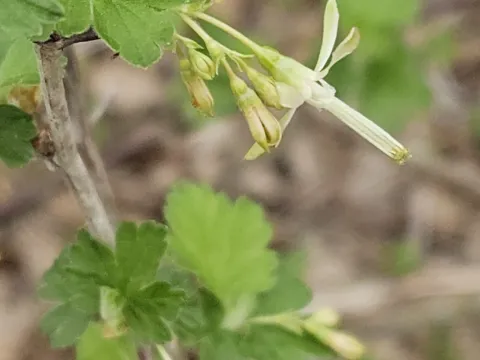
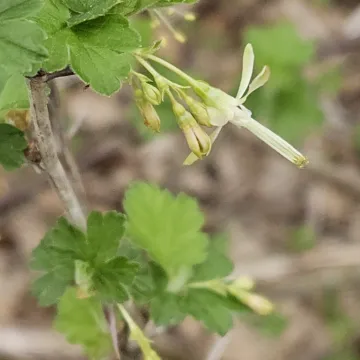
Botanically, Ribes missouriense typically grows to a height of 1 to 2 meters. Its leaves are palmately lobed and alternate along the stems. The flowers are small, often greenish-white or pale purple, blooming in early spring. The fruits are berries that change color as they ripen, often becoming dark and translucent, containing a high concentration of nutrients and characteristic tart flavors.
Cultivation requirements for the Missouri gooseberry focus on well-draining, loamy, or sandy-loam soils with a slightly acidic to neutral pH. While it is quite drought-tolerant once established, supplemental irrigation during the peak fruit-development stage is recommended to ensure high yield. Regular pruning to remove old, non-productive wood is essential to encourage new growth and maintain the health of the shrub.
The agricultural and economic utility of this plant includes both fruit processing and landscape management. The berries are suitable for jellies, jams, and preserves due to their pectin content. Furthermore, because of its prickly nature, it is often utilized as a natural barrier or wildlife hedge. Farmers must monitor for common Ribes pests, such as aphids, and fungal diseases like leaf spot, managing them with timely cultural practices and integrated pest management strategies.
Photo gallery