Petiolate currant
Ribes petiolare
Description
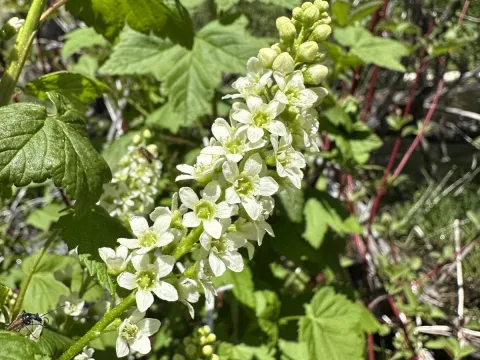
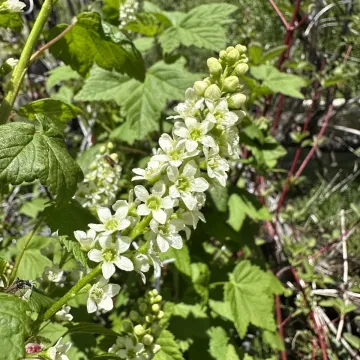
Petiolate currant (Ribes petiolare) is a deciduous shrub that belongs to the Grossulariaceae family. This species is recognized by its distinct long petioles and unique floral structure, positioning it as an interesting subject within the diverse Ribes genus, widely studied for both horticultural and botanical purposes.
Originating from the mountainous regions of Central Asia and the Himalayas, this species is naturally adapted to cool, moist environments. Its distribution reflects a high tolerance for varying mountain elevations, where it thrives in shaded or semi-shaded areas near water sources, benefiting from cooler ambient temperatures.
Botanically, the plant forms a spreading shrub, typically growing to a height of 1.5 to 2 meters. Its foliage is characterized by glandular hairs on the undersides of the leaves, which release a distinct aroma when touched. The flowers are small, arranged in pendulous racemes, and result in edible berries that possess a flavor profile similar to other wild currant species.
Agricultural requirements focus on well-draining, nutrient-rich soils with a slightly acidic profile. Due to its natural habitat, it performs best in regions that do not experience excessive summer heat. Mulching is highly recommended to maintain soil moisture levels and prevent the roots from overheating during the summer growing season.
- Excellent cold hardiness
- Preference for partial shade
- Need for consistent soil moisture
- Susceptibility to specific leaf-spot fungi
- High value in cross-breeding for disease resistance
Economically, Ribes petiolare is primarily valued for its potential in breeding programs to introduce desirable wild traits into commercial currant varieties, such as enhanced hardiness or specific chemical profiles. In landscape design, it is valued for its lush foliage and attractive fruiting habit, serving as both a functional and aesthetic shrub in cool-climate gardens.
Photo gallery