Oak-leaved currant
Ribes quercetorum
Description
Oak-leaved currant (Ribes quercetorum) is a perennial deciduous shrub belonging to the Grossulariaceae family. Unlike common garden currants, this species is primarily appreciated for its unique foliage and ornamental value rather than its fruit production, making it a specialized subject for horticultural enthusiasts and native plant gardens.
The plant is native to the Southwestern United States, particularly the foothills and oak woodlands of California. It has evolved to survive in semi-arid environments, demonstrating remarkable adaptation to the Mediterranean-style climate characterized by cool, wet winters and long, dry, hot summers.
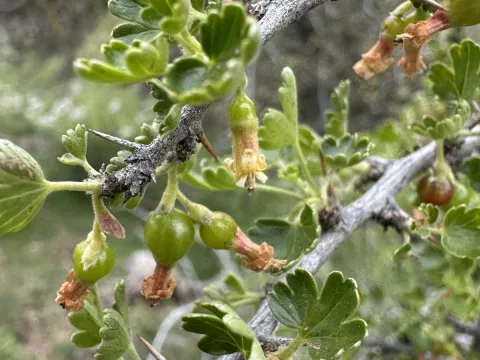
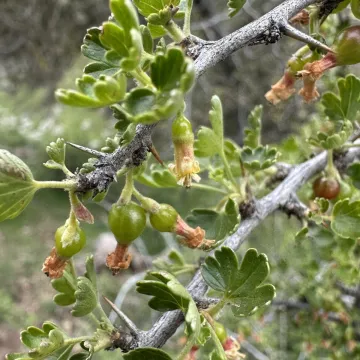
Botanically, this shrub grows to a height of approximately 1 to 2 meters. It is distinguished by its lobed, oak-like leaves and stems equipped with small, sharp spines. During the spring blooming season, the plant produces inconspicuous but attractive yellow-green flowers, followed by small, non-prominent berries that serve as a food source for local bird populations.
Cultivation requirements are strict regarding drainage and soil aeration. To successfully grow this species, one must provide a sunny or partially shaded spot with soil that does not retain excessive moisture, as the roots are susceptible to rot in boggy conditions. It is not considered a high-maintenance crop, but it requires patience and a proper site selection that mimics its natural slope habitat.
The primary use of Ribes quercetorum is in ecological landscaping and xeriscaping projects within its natural range. Regarding protection, the plant is relatively resilient to standard pests, though it may occasionally host aphids or mites. Disease control is minimal, provided that the plants have sufficient space and air circulation to prevent fungal issues such as powdery mildew, which can occur if the climate is too humid.
Photo gallery