Sierra gooseberry
Ribes roezlii
Description
Sierra gooseberry (lat. Ribes roezlii) is a deciduous shrub belonging to the Grossulariaceae family. Often referred to as a wild gooseberry due to its sharp thorns, it is a botanical relative of both currants and gooseberries. This species is native to the western regions of North America, particularly flourishing in the mountainous areas of California and Oregon.
The plant has adapted to specific ecological niches, ranging from mixed coniferous forests to open, rocky slopes. Its natural distribution is a testament to its hardiness and ability to thrive in diverse environmental conditions. Historically, the species has been noted for its presence in the Sierra Nevada range, which earned it its common English name.
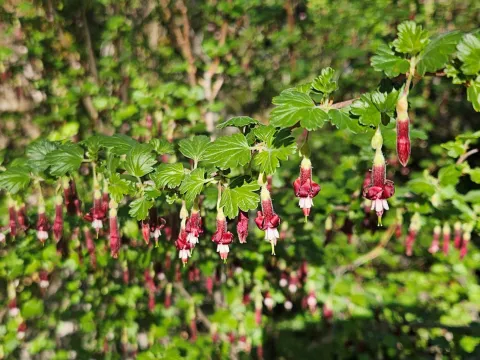
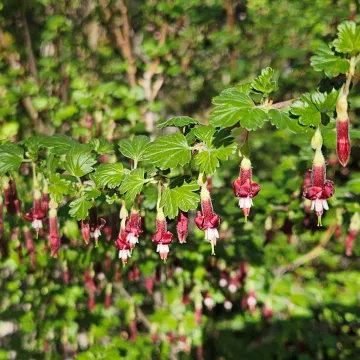
Botanically, Ribes roezlii features woody stems armed with prominent spines, reaching heights of up to 1.5 meters. The leaves are palmately lobed, while the flowers are distinctly recognizable by their reddish sepals and small, pale petals. The fruits are generally globose, often hairy, and turn a deep purple or reddish hue when fully ripe, reflecting the typical traits of the genus.
Agricultural requirements focus on providing a well-drained soil medium, as the plant is susceptible to root rot in waterlogged conditions. It prefers cool temperatures and benefits from partial shade, mimicking its natural habitat. Regular pruning is essential for maintaining plant vigor, focusing on the removal of older, woody stems to encourage the production of new fruiting wood each season.
Host use and horticultural value:
- Breeding and genetic research: utilizing its resistance traits for modern berry variety improvement.
- Ornamental use: creating natural, protective hedges in landscape design.
- Foraging: the berries are edible and traditionally used in jams, jellies, or sauces after processing.
Common pests include aphids and mites, which can cause significant damage to foliage if left untreated. Disease management is focused on preventing powdery mildew, which is a frequent issue for many Ribes species. Gardeners are advised to ensure proper spacing and airflow between plants to minimize fungal risk and maintain overall plant health throughout the growing cycle.
Photo gallery