Sticky currant
Ribes viscosissimum
Description
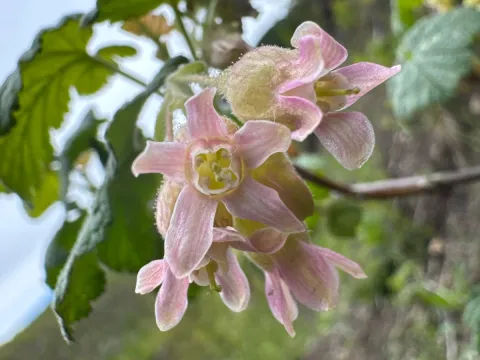
Sticky currant (lat. Ribes viscosissimum) is a deciduous shrub that belongs to the Grossulariaceae family. The plant is well-known for the glandular hairs that coat its leaves and stems, giving the surface a distinct sticky texture, which serves as a unique diagnostic feature of the species.
The native distribution of this shrub is centered in western North America, ranging from British Columbia down through the mountainous regions of California and the Rocky Mountains. It naturally occurs in forest openings, rocky slopes, and subalpine habitats, demonstrating excellent adaptation to high-altitude environmental conditions.
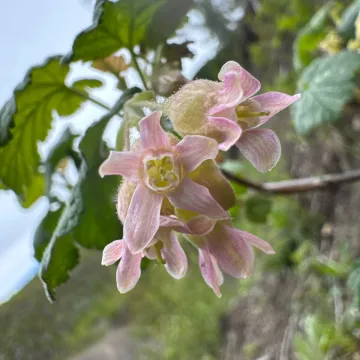
Botanically, the shrub grows to a height of approximately 1 to 2 meters. It possesses rounded, palmately lobed leaves that emit a strong resinous odor. The blooming period begins in spring, featuring nodding racemes of pink to white, bell-shaped flowers. The fruit consists of dark-colored berries that are typically covered in fine, glandular hairs.
Cultivation requirements for this species are focused on maintaining well-drained soil conditions. While the plant is quite hardy, it thrives best in light, loamy, or sandy soils that provide consistent moisture without waterlogging. It is generally tolerant of partial shade, making it a versatile choice for woodland gardens or mountain landscaping projects.
Economically, the sticky currant is used primarily as an ornamental shrub in restoration projects and botanical gardens. While its berries are edible, they are not typically grown for commercial production due to their unique, somewhat pungent flavor profile. Common pests include aphids and mites, and maintenance involves standard pruning practices to remove deadwood and maintain plant health.
Photo gallery