New Mexican locust
Robinia neomexicana
Description
New Mexican locust (Robinia neomexicana) is a hardy woody plant belonging to the Fabaceae family. Typically appearing as a large shrub or a small tree, it is highly valued for its striking appearance and resilience. As a member of the pea family, it shares the beneficial characteristic of nitrogen fixation, which enriches the surrounding soil.
Originating from the southwestern United States and northern Mexico, this plant is naturally adapted to high-altitude, arid, and semi-arid environments. Its native range includes rocky canyons and mountain slopes, demonstrating its impressive evolutionary adaptation to harsh conditions. Today, it is increasingly cultivated in various temperate zones for its ornamental and soil-stabilizing qualities.
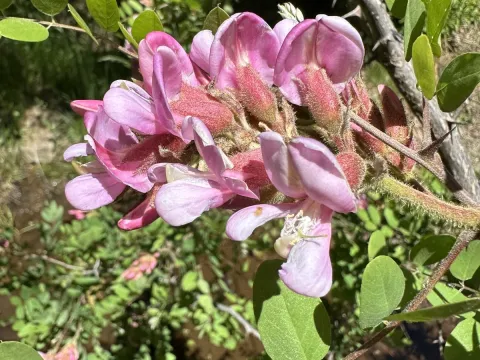
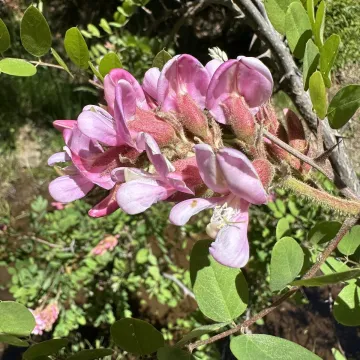
The botanical structure of the tree is defined by pinnately compound leaves and fragrant, showy rose-pink flowers arranged in racemes. These flowers typically bloom in late spring, creating a vibrant display. The stems are usually armed with spines and are characterized by a distinct glandular pubescence, which helps protect the plant from herbivores and harsh sunlight.
Regarding cultivation, the New Mexican locust is extremely undemanding. It thrives in full sun and requires well-drained, sandy, or rocky soil. The plant is exceptionally drought-tolerant once established and does not require frequent pruning or intensive fertilization. Its ability to withstand poor soils makes it an ideal candidate for low-maintenance landscaping projects.
Key areas of application include:
- Enhancing landscape beauty in public and private gardens.
- Stabilizing loose soils on slopes to prevent erosion.
- Serving as a source of nectar for local pollinators.
- Providing biological diversity in agroforestry systems.
While generally resistant to pests, it can occasionally be affected by aphids or borers. Preventive measures, such as avoiding waterlogging and ensuring adequate air circulation, are usually sufficient to maintain the plant's health. The species remains a robust choice for sustainable planting schemes, requiring minimal chemical intervention during its life cycle.
Photo gallery