Roemeria refracta
Roemeria refracta DC.
Description
Roemeria refracta, commonly known as the red-flowered hornpoppy or Roemeria, is an annual herbaceous plant within the Papaveraceae family. While often categorized as a field weed in agricultural settings, its specialized chemical profile makes it a subject of scientific interest for pharmacological extraction.
The native range of the species encompasses arid and semi-arid regions stretching from the Eastern Mediterranean through the Caucasus to Central Asia. It is highly adapted to continental climates, thriving in steppes and disturbed soils where competition for water is the primary survival factor.
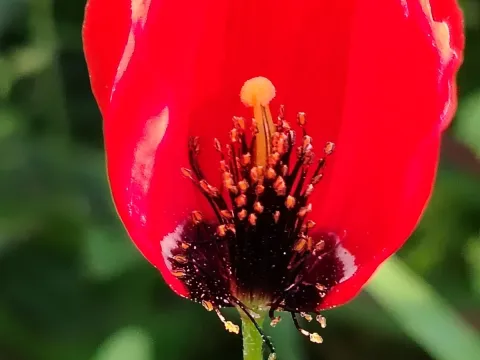
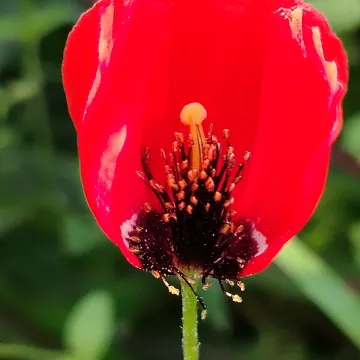
Botanically, the plant is characterized by a slender, branched stem, usually reaching heights of up to 40 centimeters, and deeply dissected foliage. The most prominent feature is the large, four-petaled flower, which displays a vivid scarlet color with a distinctive dark spot at the base, creating a stark visual contrast against arid landscapes.
Cultivation requirements favor well-drained, sandy, or stony substrates with high solar radiation levels. As a drought-tolerant crop, it does not require intensive irrigation, but it is highly sensitive to waterlogged conditions which can lead to root rot. Successful production requires a clean seedbed free from aggressive perennial grasses.
Management of the species involves monitoring for typical poppy family pests, such as aphids and specific beetles that may defoliate the plant. Disease control focuses on minimizing moisture stress and ensuring adequate air circulation to prevent fungal pathogens. Potential хозяйственное use revolves around the harvesting of alkaloids used in medical research, requiring specific post-harvest drying protocols.
Photo gallery