Indian yellowcress
Rorippa indica
Description
Indian yellowcress (Rorippa indica) is a herbaceous perennial or annual plant belonging to the Brassicaceae family. Known for its adaptability, this species is increasingly recognized not just as a wild weed, but as a potential leafy green crop in specific agricultural niches.
Originating from East and South Asia, the plant has a wide distribution range across subtropical and temperate zones. It is commonly found in wetlands, near riverbanks, and in agricultural landscapes such as irrigated paddy fields. Its ability to tolerate varying moisture levels contributes to its success in diverse ecosystems.
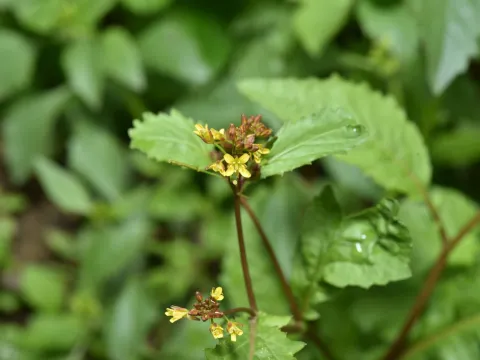
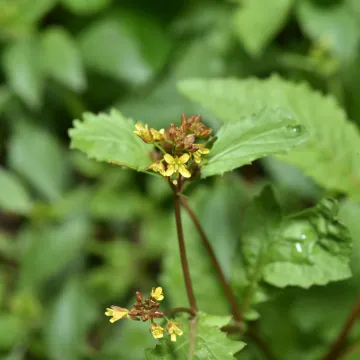
Botanically, the plant features a rosette of basal leaves and an upright, branched stem reaching heights of 30 to 50 cm. The leaves are generally lobed, and the flowers are characterized by their small, bright yellow petals. The fruit is a silique that holds tiny seeds, facilitating easy propagation through natural dispersal methods.
The cultivation requirements focus heavily on soil moisture and adequate sunlight. While it can grow in various soil types, it performs best in rich, moist soils with a near-neutral pH. Proper irrigation management is essential in intensive farming to prevent wilting during high-temperature periods, while avoiding waterlogging that could lead to root diseases.
The plant has multiple uses, including culinary applications as a spicy salad green or cooked vegetable, and historical use in traditional medicine systems. Regarding plant health, pests like flea beetles and aphids are common concerns. Disease management primarily involves monitoring for fungal pathogens such as downy mildew, which can spread quickly in high-density plantings.
Photo gallery