Bog yellowcress
Rorippa palustris
Description
Bog yellowcress (Rorippa palustris) is a herbaceous plant belonging to the Brassicaceae family. Known for its adaptability to wetland environments, this species is increasingly being studied for its potential in specialized horticulture. While often found in the wild, its agronomic profile provides interesting opportunities for growers managing high-moisture agricultural zones.
The plant has a broad natural distribution across the temperate regions of the Northern Hemisphere, spanning across North America, Europe, and Asia. It naturally thrives in riparian habitats, marshy areas, and along riverbanks. When cultivated, it requires sites that offer consistent moisture levels, making it a viable crop for flood-prone lands or areas with high water tables.
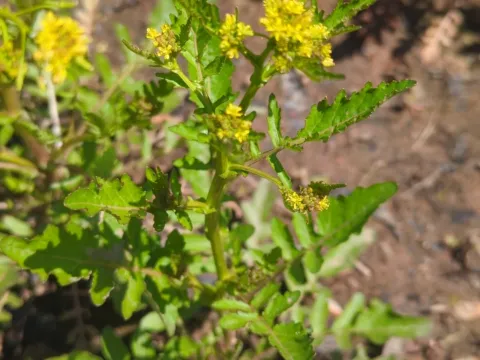
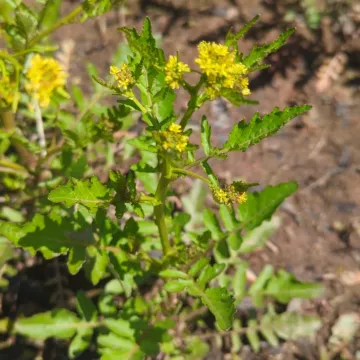
Botanically, Rorippa palustris is typically an annual or biennial plant characterized by a branched stem and deeply lobed, pinnatifid leaves. The yellow flowers are relatively small and arranged in racemes, developing into siliques (pods) upon pollination. The plant’s root system is adapted for efficient nutrient uptake in saturated, oxygen-poor soil conditions.
Successful cultivation of Bog yellowcress relies on careful water management and site selection. Fertile, organic-rich soil is preferred. In terms of agronomy, growers must balance irrigation to maintain moisture without inducing stagnation, which could lead to root decay. Proper spacing and weed control during the early stages of growth are crucial for maximizing yield.
The agricultural usage of the plant includes culinary applications, where it serves as a nutrient-dense green, similar to other mustard greens. It is also valued for its ecological role in wetlands. Farmers should be aware of common threats, such as flea beetles and various fungal pathogens that flourish in damp environments. Integrated Pest Management (IPM) practices are recommended for sustainable yields.
- High tolerance for saturated soils.
- Nutrient-rich foliage profile.
- Rapid growth cycle under favorable conditions.
- Low input requirements for specific wetland sites.
Photo gallery