
Smooth rose
Rosa blanda
Description
The smooth rose (Rosa blanda), often referred to as the meadow rose or American wild rose, is a deciduous shrub belonging to the Rosaceae family. It is widely recognized for its hardiness and serves as a significant botanical species in North American ecosystems, frequently appearing in gardens that prioritize native and low-maintenance plants.
The species is native to North America, spanning vast territories in Canada and the northern United States. It naturally thrives in diverse environments, ranging from moist meadows and stream banks to open rocky woods, showcasing an impressive adaptability to varying moisture levels and soil compositions.
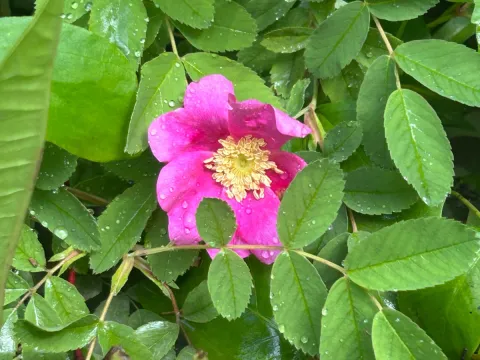
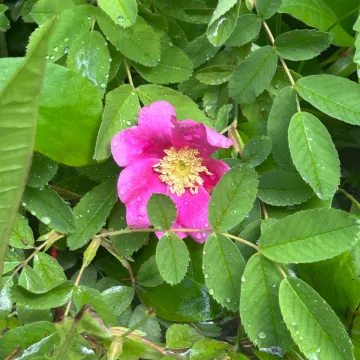
Botanically, Rosa blanda is distinguished by its relatively spineless stems, especially on mature wood, which contrasts sharply with most other wild rose species. It typically grows as a small shrub, 1 to 1.5 meters tall, featuring singular, fragrant pink flowers that bloom in early summer, followed by prominent, globular red hips that persist through the winter.
In terms of cultivation, this rose prefers full sun to light shade and performs best in well-drained, slightly acidic soils. It is remarkably resilient to cold weather and adapts well to various climates without the need for intensive winter protection. Maintenance tasks are limited to basic pruning to maintain shape and the removal of dead wood after the flowering season.
The primary horticultural use of the smooth rose is in restoration ecology, slope stabilization, and naturalistic landscape design. Due to its genetic vigor and cold tolerance, it is also utilized in rose breeding programs as a hardy rootstock. Additionally, the rose hips are edible and valued for their high vitamin C content, attracting birds and beneficial wildlife to the garden.
- Spineless mature stems
- High cold tolerance
- Native to North America
- Supports local pollinators
Photo gallery