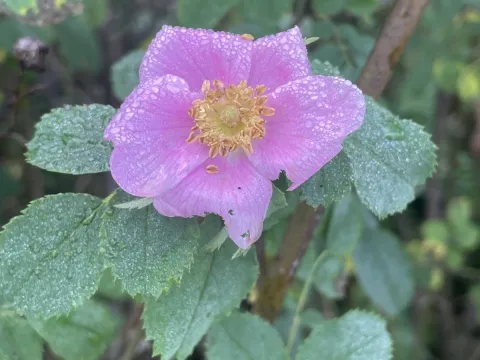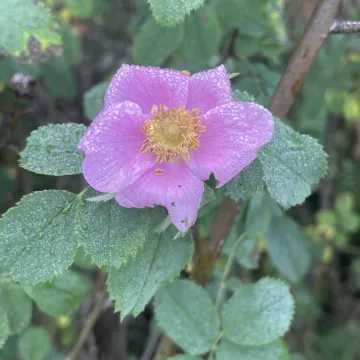
California wild rose
Rosa californica
Description
The California wild rose (lat. Rosa californica) is a deciduous shrub that belongs to the Rosaceae family. It is a robust plant species known for its hardiness and ability to thrive in a variety of environments. This wild rose species is highly valued for its ecological benefits and aesthetic appeal in informal landscape settings.
The plant is native to the western regions of North America, specifically California and parts of Oregon. Its natural habitat is typically found in riparian areas, canyons, and along stream banks. This preference for moist soils makes it an ideal candidate for erosion control in naturalistic garden designs or near water features.
Botanically, Rosa californica is characterized by its prickly stems equipped with curved thorns and compound leaves with distinct serrated margins. The flowers are typically pink, ranging from pale to deep shades, and bloom from late spring into the summer months. These flowers are followed by bright red rose hips that provide food for local wildlife during the colder seasons.
Cultivation requires a location that receives full sun or partial shade. The soil should be well-draining, although the plant can tolerate heavier soils if they are kept consistently moist. Maintenance involves occasional pruning to manage the spread of the bush and to encourage healthy new growth. It is generally resistant to most common garden stresses once established.
The primary use of this culture is in restoration ecology and decorative plantings that support biodiversity. It serves as a vital resource for pollinators such as bees and various butterfly species. While generally robust, gardeners should watch for signs of powdery mildew and aphids, managing these issues with proper plant spacing and organic horticultural interventions when necessary.
- Excellent choice for wildlife-friendly gardens.
- Provides nesting sites for birds due to its dense, thorny thickets.
- High tolerance for periodic flooding in natural habitats.
- Capable of forming extensive thickets through underground rhizomes.
Photo gallery