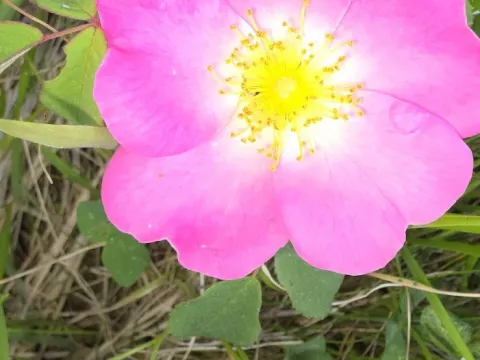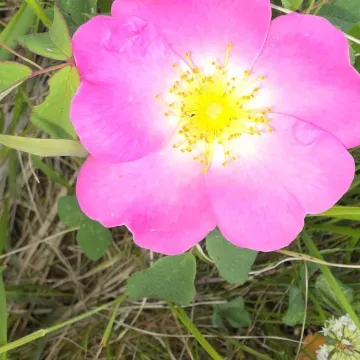
French rose
Rosa gallica
Description
The French rose (Latin: Rosa gallica) is a perennial shrub belonging to the Rosaceae family. Known historically as one of the oldest species of roses cultivated in the Mediterranean region, it serves as a foundational ancestor for a significant portion of modern rose varieties, noted for its hardiness and aromatic properties.
The plant originates from Central and Southern Europe and parts of Western Asia. In the wild, it thrives in temperate climates, typically found on forest margins and sunny hillsides. Its ability to propagate via underground runners allows it to colonize available space effectively, making it a robust choice for various environmental conditions.
Botanically, this shrub usually grows to a height of 1 to 1.5 meters. It is characterized by straight, prickly stems and dull, dark green pinnate leaves. The flowers are typically solitary or clustered, ranging from light pink to dark crimson, and are highly valued for their strong, intense fragrance which is chemically complex and rich in essential oils.
To ensure successful cultivation, the French rose requires full sun exposure and well-drained, fertile soil with a neutral or slightly alkaline pH. Maintenance involves regular pruning to remove dead or weak wood, providing adequate hydration during peak growth stages, and applying balanced fertilizers to support vigorous flowering and foliage development.
The economic and practical applications of the French rose are diverse:
- Commercial extraction of rose oil and rose water for perfumery.
- Culinary use, including the production of preserves, jams, and herbal infusions.
- Use in pharmaceutical preparations due to high antioxidant and vitamin content.
- Landscape architecture for establishing durable, flowering hedges.
Like many species in the genus, this plant is susceptible to common rose ailments such as powdery mildew, black spot, and rust. Insect pests like aphids and spider mites can also impact vitality. Effective management focuses on cultural practices, such as maintaining proper plant spacing for airflow, combined with integrated pest management (IPM) to maintain plant health without overuse of synthetic chemicals.
Photo gallery