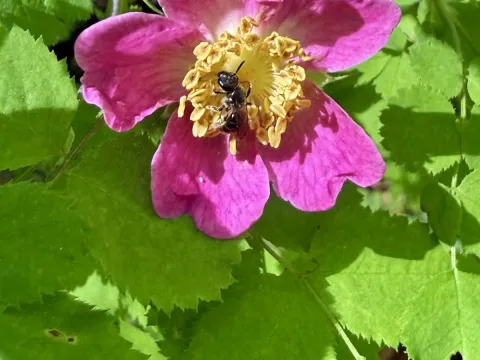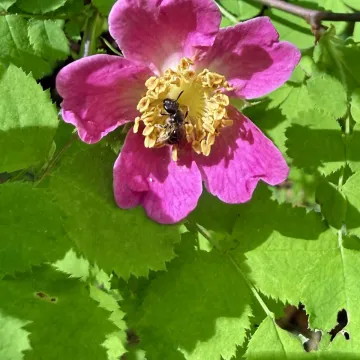
Wood rose
Rosa gymnocarpa
Description
The wood rose (Rosa gymnocarpa) is a perennial deciduous shrub belonging to the Rosaceae family. Often referred to as the dwarf rose, this native North American species is renowned for its delicate structure and its ability to thrive in forest understories, making it a distinct choice for gardeners interested in native plant collections.
Originating from the Pacific Northwest, its natural range stretches from British Columbia down through California. In these native environments, it is typically found in moist coniferous and mixed forests. Its evolutionary adaptation to life in the shade is one of its most defining horticultural characteristics compared to most sun-loving rose varieties.
Botanically, the plant is characterized by slender, bristly stems that can reach heights of up to 1.5 meters. The leaves are small and pinnately compound, providing a light, airy texture to the garden. The flowers are small, usually solitary, and feature soft pink petals. The fruit, or hips, are smooth and bright red, maturing in late summer and staying on the branches well into the autumn.
Cultivation requires well-drained, acidic to neutral soil that remains consistently moist but not waterlogged. Because of its forest origin, the wood rose performs best in partial to full shade. It requires minimal pruning compared to hybrid roses, focusing mainly on the removal of dead or crossing branches to maintain healthy airflow.
In terms of хозяйственного (practical) use, the plant is primarily ornamental, serving as an excellent ground cover or an understory shrub in woodland-themed landscapes. It is also a significant ecological asset, providing food for birds and mammals. Common pests include aphids and spider mites, which can be managed with standard horticultural oil sprays or by encouraging beneficial predatory insects.
- Ideal for shade-heavy garden areas.
- Provides high wildlife value in native landscapes.
- Resistant to many diseases common in garden roses.
- Requires little maintenance compared to other species.
Photo gallery