Cinnamon rose
Rosa majalis
Description
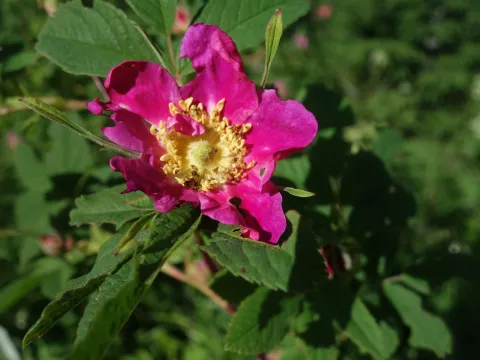
Cinnamon rose (lat. Rosa majalis), commonly referred to as the May rose, is a perennial deciduous shrub belonging to the Rosaceae family. This species is highly valued for its medicinal properties and its resilience in various temperate climates. Its natural range extends across large areas of Europe and Siberia, where it is found in forest fringes, meadows, and along riverbanks.
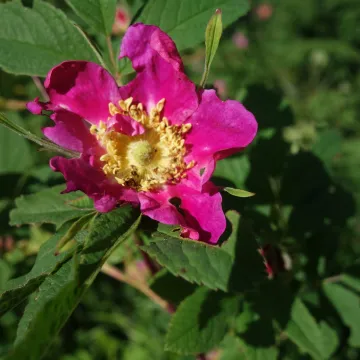
Botanically, the plant is characterized by its slender, reddish-brown branches covered in paired, hooked thorns. It typically reaches a height of 1.5 to 2 meters. During the blooming season, which occurs in late spring, it produces solitary or small clusters of fragrant, deep pink flowers. The hips (fruits) develop into a characteristic round shape, maturing into a bright orange-red color by late summer.
For optimal agricultural production, the Cinnamon rose requires well-drained, fertile soil with a neutral to slightly acidic pH. While it is hardy against frost, it thrives best in sunny positions that receive sufficient rainfall throughout the growing season. The plant's root system is extensive, which allows it to thrive in diverse soil textures, though waterlogged conditions should be strictly avoided to prevent root rot.
Agrotechnical management primarily involves structural pruning to maintain the plant's vigor and promote consistent fruit yields. As the bushes age, selective pruning of wood older than five years is necessary to ensure air circulation and light penetration, which in turn reduces the risk of fungal infections. Propagation is typically achieved through root division or cuttings, as this method is more reliable for establishing uniform plantation blocks than seed propagation.
The economic value of Rosa majalis lies primarily in its fruit, which contains exceptionally high concentrations of Vitamin C, antioxidants, and essential oils. These are processed into syrups, teas, pharmaceutical extracts, and dietary supplements. Beyond its pharmacological utility, the shrub serves as a vital component in land conservation programs due to its ability to stabilize soil and provide a habitat for beneficial pollinators.
- Powdery mildew
- Rose rust
- Rose leafhopper
- Rose hip fly
- Sawflies
Photo gallery