Nootka rose
Rosa nutkana
Description
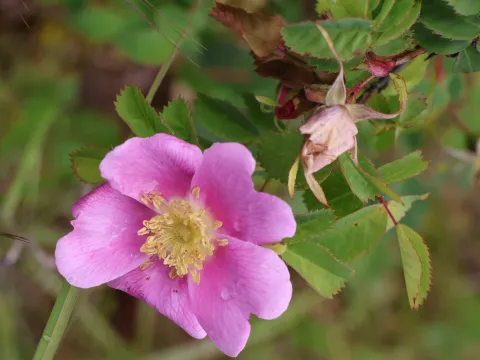
The Nootka rose (Rosa nutkana) is a deciduous perennial shrub belonging to the Rosaceae family. Renowned for its hardiness and classic beauty, this species is not only a significant wild rose in North America but also a valuable asset in horticulture for its resilience in various environmental conditions.
Originating from western North America, the Nootka rose has a broad native range extending from Alaska and British Columbia southward to California and eastward into the Rocky Mountains. It thrives in diverse habitats including open forest clearings, riverbanks, meadows, and mountainsides, showcasing its ability to adapt to varying moisture levels and temperature extremes.
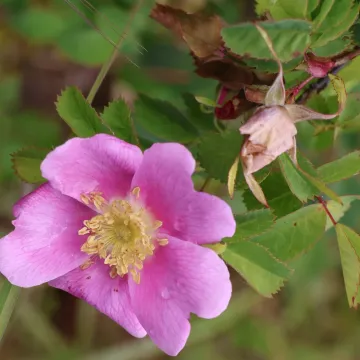
Botanically, this shrub typically grows to a height of 1 to 3 meters. It features robust, thorny stems and pinnately compound leaves composed of 5 to 9 serrated leaflets. The flowers are notably large, usually solitary, and exhibit a vibrant pink hue with a distinct fragrance. Following the blooming period, the plant produces globose, red rose hips that persist well into the winter months, providing food for wildlife.
Agricultural requirements for Rosa nutkana are relatively straightforward as the species is highly adaptable. It prefers well-drained soil rich in organic matter and benefits from full sun to partial shade. Maintenance involves periodic pruning to remove old or damaged canes and improve air circulation within the canopy. In agricultural settings, it requires minimal irrigation once established and is generally less demanding regarding fertilization than hybrid garden roses.
The economic and practical use of the Nootka rose spans several sectors. It is frequently employed in landscaping to create naturalistic hedges, act as a windbreak, or stabilize soil on steep banks to prevent erosion. Additionally, the hips are edible and historically used in traditional culinary and medicinal practices. Because of its vigorous root system and general disease resistance, it is also highly regarded as a rootstock for ornamental rose propagation.
- Cold and frost hardiness
- Excellent drought tolerance
- High ecological value for pollinators
- Low maintenance requirements
- Effective soil stabilization
Photo gallery