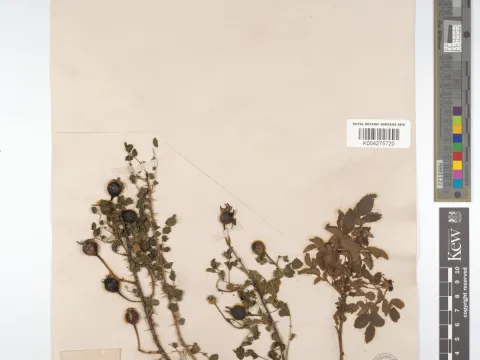

Reverse rose
Rosa reversa
Description
The Reverse rose (Rosa reversa) is a perennial shrub belonging to the Rosaceae family. Recognized for its unique botanical features, this species is often studied for its resilience in high-altitude environments and its distinct fruit shape, which sets it apart from common wild rose varieties.
This species is native to European mountain ranges, where it thrives in limestone-rich and stony habitats. Its evolution in such specific niches has made it a highly hardy plant capable of enduring significant temperature fluctuations and poor soil conditions, which are characteristic of its wild natural range.
Botanically, Rosa reversa is characterized by a bushy growth habit and stems densely covered in thorns. The leaves are typically imparipinnate and provide a rich green backdrop for the flowers. The fruit, for which the plant is named, exhibits an obovate (reverse-egg) shape, ripening to a vibrant color in the late summer and early autumn.
In terms of agricultural and horticultural requirements, the species performs best in well-drained, alkaline or neutral soils. It is highly resistant to drought once established, making it a low-maintenance choice for dry-landscape projects. Regular but light pruning is necessary to maintain the shrub's shape and encourage healthier flower production during the following season.
The хозяйственное (economic/practical) significance of Rosa reversa includes its use as a genetic source for breeding programs aimed at developing disease-resistant ornamental roses. It is also a valuable plant for erosion control on slopes due to its vigorous root system. Common pests to watch for include aphids and spider mites, which can be managed with standard integrated pest management practices.
Photo gallery