Prairie rose
Rosa setigera
Description
The Prairie rose (Rosa setigera) is a perennial shrub belonging to the Rosaceae family. Known for its climbing habit and vigorous growth, this plant stands out among native North American roses. It is highly valued by horticulturists for its extreme hardiness and ability to thrive in challenging soil conditions where other ornamental varieties might fail.
Originally native to the eastern and central regions of the United States, this species is typically found in meadows, thickets, and along forest edges. Its natural range demonstrates its preference for temperate climates. The plant's historical significance lies in its role as a foundation for breeding programs aimed at creating resilient, disease-resistant climbing roses for home gardens.
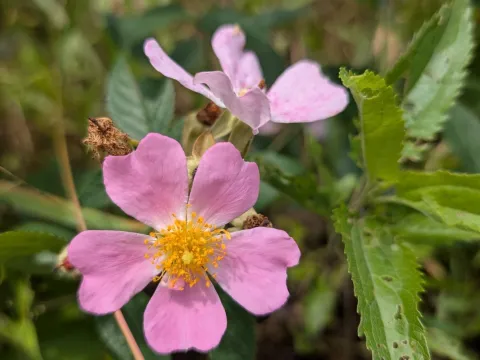
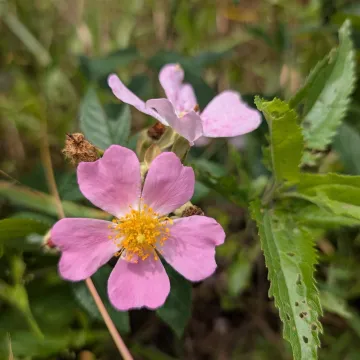
Botanically, Rosa setigera is recognized by its arching or climbing canes that can reach impressive lengths. The leaves are typically trifoliate, dark green, and somewhat leathery, providing a dense cover. In early summer, the shrub produces clusters of delicate, fragrant pink flowers with five petals. These flowers later develop into bright red hips that remain on the plant into the autumn.
Agricultural requirements for this species are relatively modest. It prefers full sun but can tolerate partial shade, provided the soil remains well-drained. It is essential to choose a site with sufficient space for its wide growth habit. Regular maintenance involves pruning to remove dead wood and thinning out crowded stems, which enhances air circulation and prevents the development of fungal pathogens.
Common issues include susceptibility to black spot and powdery mildew, especially in regions with high humidity or poor airflow. Pests such as aphids and spider mites can occasionally affect the plant during the growing season. However, with proper site selection and minimal intervention, Rosa setigera proves to be an incredibly reliable and long-lived addition to any landscape.
Photo gallery