
Sherard's rose
Rosa sherardii
Description
Sherard's rose (Latin: Rosa sherardii) is a perennial shrub belonging to the Rosaceae family. This species is categorized as a type of wild rose, known for its resilience and ability to thrive in semi-natural habitats across various European regions.
The plant originates from Europe, with a distribution range extending from parts of the UK to Northern and Central Europe. It typically thrives in hedgerows, thickets, and forest margins, showing a significant tolerance for diverse light conditions and moderate soil moisture.
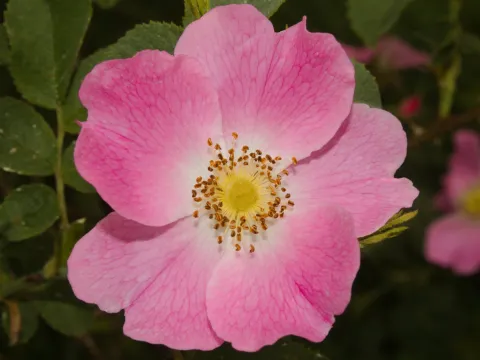
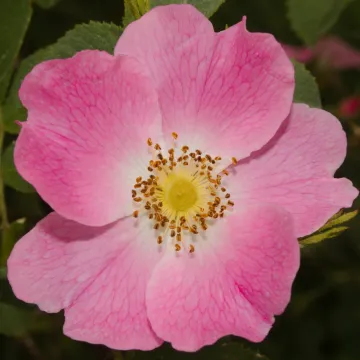
From a botanical perspective, the plant is characterized by its arched stems densely covered in thorns and distinctive grey-green leaves with visible pubescence. The flowers, appearing in the summer, feature soft pink petals, followed by the development of fleshy rose hips that are rich in essential vitamins and organic acids.
Agricultural requirements include planting in well-draining, moderately fertile soil. Rosa sherardii performs best in full sun or partial shade. Agrotechnical management requires consistent annual pruning to remove deadwood and promote healthy circulation, along with spring fertilization to support robust foliage and fruit production.
Economically, this species is utilized in landscaping for natural fencing and wildlife corridors. The hips are harvested for herbal infusions and medicinal applications. Common threats to plant health include fungal infections such as rust or powdery mildew, and insect pests like aphids, which must be managed through integrated pest control strategies.
- High cold tolerance and winter hardiness.
- Excellent support for biodiversity in gardens.
- Nutrient-rich fruit production.
- Low-maintenance landscaping potential.
Photo gallery