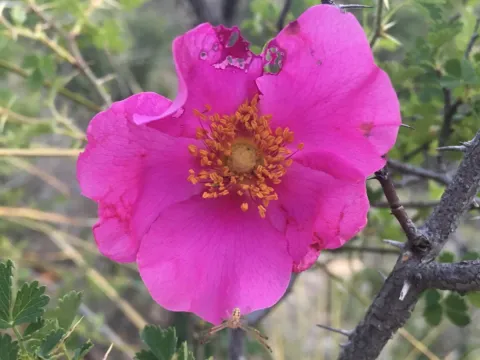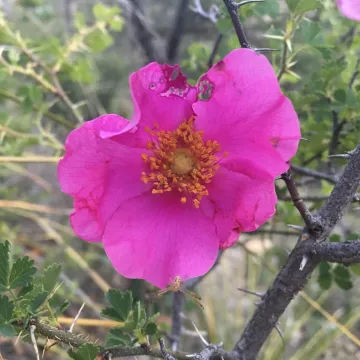
Star rose
Rosa stellata
Description
The Star rose (Rosa stellata) is a distinct species within the Rosaceae family, recognized for its specialized adaptation to arid environments. Unlike the highly cultivated hybrid roses, this species remains closer to its wild-type ancestors, offering unique morphological traits that make it a fascinating specimen for specialized botanical collections.
Native to the southwestern United States, particularly within the states of New Mexico and Texas, the Star rose is naturally accustomed to harsh, semi-desert conditions. Its range is confined to regions where rainfall is infrequent and the soil profile is characterized by high alkalinity and poor nutrient content, highlighting the plant's natural survival mechanisms.
Botanically, Rosa stellata is a low-growing shrub, typically reaching heights between 60 to 90 centimeters. It is easily identified by its distinctive prickly stems and small, stellate flowers. The foliage often features a glaucous or grayish-green appearance, which is an adaptive feature designed to minimize transpiration and protect the plant from high levels of solar radiation.
The cultivation requirements for the Star rose demand a xeriscaping approach rather than traditional rose gardening. The plant thrives in well-draining, gravelly, or sandy soils where the root zone is protected from waterlogging. It requires full sun exposure and is highly tolerant of heat, making it an excellent choice for regions with high summer temperatures and low humidity.
- Requires minimal supplemental irrigation once established.
- Thrives in lean, well-draining soil structures.
- High tolerance to alkaline soil conditions.
- Needs significant air circulation to prevent foliage diseases.
In terms of хозяйственное использование, the Star rose is primarily utilized as an ornamental plant in drought-tolerant gardens and rockeries. While robust, growers should remain vigilant against common pests such as aphids and spider mites, which can proliferate if the plant becomes stressed. Proper management of drainage and avoidance of over-fertilization are the keys to maintaining the long-term health of this unique species.
Photo gallery