Rubus alceifolius
Rubus alceifolius
Description
Rubus alceifolius is a perennial shrub belonging to the Rosaceae family. Often referred to as the giant bramble, it is closely related to commercial blackberries and raspberries. While members of the Rubus genus are generally valued for their berries, this specific species is primarily recognized in agronomy as a highly invasive and persistent weed that can significantly disrupt agricultural productivity in tropical regions.
The plant originates from Southeast Asia. Due to its robust nature, it has been introduced to various tropical islands and countries, where it has naturalized aggressively. It forms dense, impenetrable thickets that overtake pastures, plantations, and forest margins. Its ability to propagate both by seeds and through vegetative rooting makes it one of the most difficult plants to eradicate once it is established.
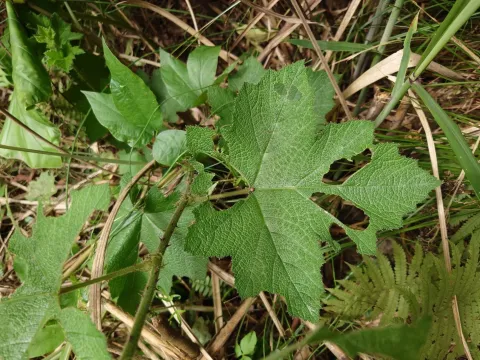
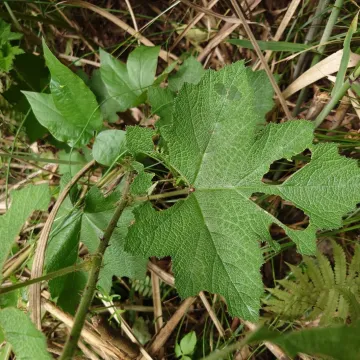
From a botanical perspective, the plant is characterized by long, sprawling, prickly canes that can reach significant lengths. The leaves are large, simple, and lobed, bearing a resemblance to those of the Althaea genus, which gives the species its specific epithet. The fruit consists of small, aggregated drupelets that are edible but generally lacking in flavor compared to cultivated varieties.
In terms of climatic and soil requirements, the plant is highly adaptable, though it thrives best in warm, humid tropical environments with fertile soils. There is no standard agronomic protocol for its cultivation; instead, management strategies are focused on suppression. Effective control is typically achieved through integrated management practices, combining chemical application with manual clearing to prevent its spread into sensitive habitats.
The economic utility of Rubus alceifolius is largely negative, as it is considered a pest rather than a crop. However, in certain ecological contexts, it provides habitat and cover for various insects and small wildlife species. It is susceptible to various fungal pathogens and pests that typically affect the genus Rubus, which researchers occasionally study as potential biological control agents to manage its invasive spread.
Photo gallery