
Rubus biflorus
Rubus biflorus
Description
Rubus biflorus, commonly known as the white-stemmed bramble, is a species of flowering shrub in the Rose family (Rosaceae). It is distinguished by its dramatic, ghostly white stems covered in a thick, waxy bloom, which creates a striking visual contrast against the dark foliage and red spines. While it is often cultivated for its ornamental value, it also belongs to the berry-producing genus Rubus, making it a plant of both aesthetic and botanical interest.
The plant is native to the high-altitude regions of the Himalayas and parts of southwestern China. Due to its natural habitat, Rubus biflorus is well-adapted to cooler temperate climates. It prefers environments that offer sufficient moisture and cool summers, which allows it to thrive in various garden settings across Europe and North America where winters are cold but not excessively harsh.
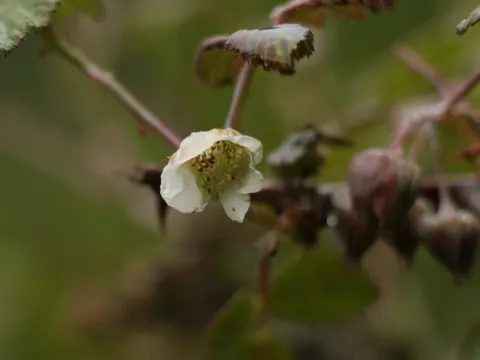
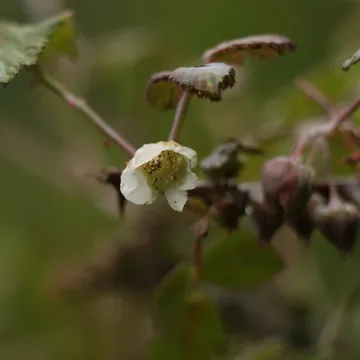
Botanically, it is a vigorous deciduous shrub that can reach heights of 2–3 meters. The stems are arching and heavily armed with hooked prickles. Its leaves are pinnate, deep green on top, and paler underneath. During late spring, the plant produces small white flowers, followed by edible, golden-yellow or orange berries that provide a unique flavor profile often utilized in experimental breeding and niche fruit cultivation.
Cultivation requires fertile, well-draining soil that is rich in organic matter. The species thrives in neutral to slightly acidic pH levels. It is important to site the plant in a location that receives partial shade during the hottest parts of the day to prevent the stems from scorching and the roots from drying out too rapidly. Adequate spacing is crucial due to its vigorous spreading habit.
Maintenance focuses on annual pruning to remove old, woody stems that have already fruited, encouraging the growth of new, vibrant white canes. Common pests include aphids and mites, while fungal issues like rust can occur in areas with poor air circulation. Regular mulching is recommended to maintain soil moisture and temperature stability, ensuring healthy root development throughout the growing season.
- Remarkable ornamental white stems with a waxy bloom.
- Cold-hardy nature suited for temperate mountain regions.
- Edible fruit potential for niche agricultural applications.
- Vigorous growth habit requiring strategic pruning.
Photo gallery