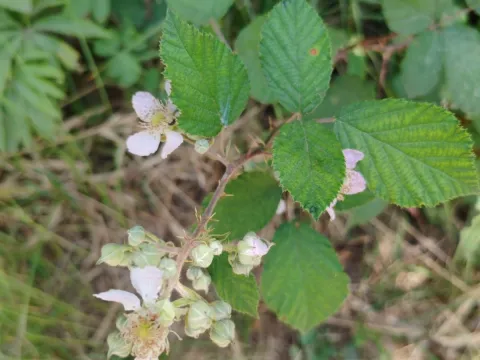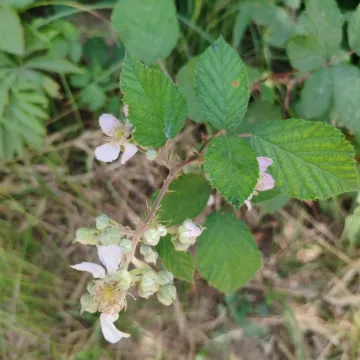
Two-colored blackberry
Rubus bifrons
Description
The two-colored blackberry (Rubus bifrons) is a perennial shrub belonging to the Rosaceae family. It is distinguished by its characteristic foliage, which features dark green upper surfaces and a distinctive whitish or greyish tomentose (felt-like) pubescence on the undersides, which gives the species its scientific name.
Originating primarily from Europe, this species is found in a wide variety of habitats, including forest edges, thickets, and waste grounds. It has adapted to various temperate climates, proving to be a resilient plant capable of thriving in diverse ecological conditions across its natural range.
From a botanical standpoint, Rubus bifrons typically displays arching or trailing canes that are well-armed with prickles. The flowers are generally white or light pink, produced in terminal clusters. The fruit is an aggregate drupe, which is highly valued for its flavor profile and nutritional content when fully mature.
Cultivation requirements involve selecting sunny to semi-shaded locations with well-drained, nutrient-rich soil. Proper maintenance includes the pruning of spent canes to encourage new growth and reduce disease pressure. The plant is relatively hardy, but regular fertilization and irrigation during dry spells are recommended to ensure optimal fruit yields.
Economic and culinary uses include fresh consumption, as well as the preparation of preserves, syrups, and desserts. Gardeners must remain vigilant against common pathogens such as fungal leaf spots and pests like aphids or spider mites. Integrated pest management strategies are often sufficient to maintain healthy and productive plants in a small-scale or garden setting.
Photo gallery