
Canada blackberry
Rubus canadensis
Description
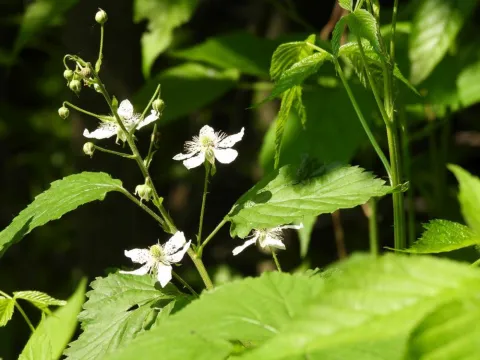
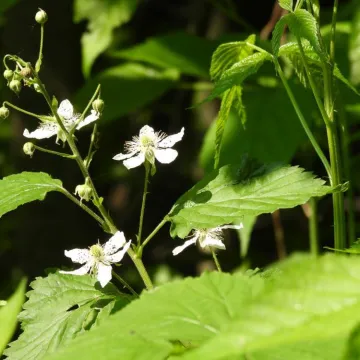
Canada blackberry (Rubus canadensis) is a perennial shrub belonging to the Rosaceae family. Distinguished by its lack of thorns on the canes, this species is highly valued in modern horticulture for its ease of management. It is a robust plant, capable of enduring varied environmental conditions, which makes it a reliable choice for commercial and home berry cultivation.
Originating from the eastern regions of North America, this plant is naturally adapted to forest edges and mountain slopes. Its native habitat provides insight into its environmental preferences: it thrives in cool, temperate climates and demonstrates significant winter hardiness. Over time, it has been introduced to various regions globally, gaining popularity as a productive fruit crop.
Botanically, Rubus canadensis is characterized by its biennial cane structure. The first-year canes, known as primocanes, remain vegetative, while second-year canes, or floricanes, produce flowers and fruit. The leaves are compound and palmate, providing a lush appearance. The fruits are deep black, aggregate drupelets that offer a distinctively sweet and slightly tart flavor profile when fully mature.
Successful cultivation requires well-draining, slightly acidic soil rich in organic matter. While the plant is adaptable, it performs best when provided with consistent moisture during the growing season. Management practices typically include biennial pruning to remove spent canes, regular irrigation during dry spells, and applying organic mulch to suppress weeds and maintain stable soil temperature.
The agricultural and economic utility of Canada blackberry includes:
- Fresh fruit production for local and export markets.
- Processing into high-quality juices, preserves, and flavorings.
- Integration into agroforestry systems as a soil-stabilizing plant.
- Utility in breeding programs to introduce thornless traits into commercial cultivars.
As with many species in the Rubus genus, this plant is susceptible to certain pathogens, including rust, powdery mildew, and cane blight. Common pests such as the raspberry crown borer and various aphids may also cause damage. Integrated pest management, including sanitation, proper plant spacing to ensure airflow, and timely monitoring, is essential for maintaining a healthy and productive crop.
Photo gallery