Canary Islands blackberry
Rubus canariensis
Description
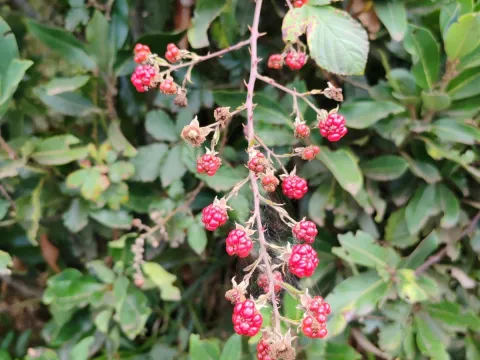
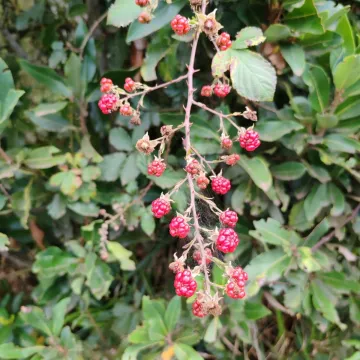
Canary Islands blackberry (Rubus canariensis) is a perennial evergreen subshrub belonging to the Rosaceae family. As an endemic species, its natural range is strictly confined to the Canary Islands. The plant features vigorous, arching, or sprawling stems densely covered with prickles, which are a characteristic morphological trait of this genus.
From a botanical perspective, the plant is remarkably well-adapted to the subtropical environments of the islands. Its leaves are compound and often feature a pubescent underside, which aids in water retention. The flowers, typically appearing in clusters, evolve into small, dark-colored aggregate drupes that serve as the primary reproductive unit of the plant and a food source for local fauna.
The climate requirements for Rubus canariensis involve mild temperatures with no significant frost, as the species is sensitive to sudden cold snaps. It thrives in locations with consistent soil moisture and high atmospheric humidity. In terms of soil, it prefers organic-rich, well-draining substrates with a slightly acidic to neutral pH, common in the forested slopes where it naturally occurs.
Agronomic practices for this species include consistent irrigation, regular mulching to keep the root zone cool, and strategic pruning. Pruning is essential to remove spent floricanes and promote the growth of healthy primocanes, ensuring consistent yields. The plant is relatively resistant to common pests, though humidity management is crucial to prevent fungal issues in dense foliage.
- Adaptable to partial shade conditions.
- Requires trellis support for optimal light exposure.
- Responds well to organic composting.
- Moderate pruning necessity for yield management.
Economically, the Canary Islands blackberry is utilized primarily for local consumption and artisanal production of jams and wines. Beyond its culinary application, it serves as a valuable biological resource for research into blackberry resilience and as a resilient, thorny ornamental shrub for creating secure perimeter fencing or natural windbreaks in Mediterranean-type climates.
Photo gallery