Lawyer vine
Rubus cissoides
Description
Rubus cissoides, widely known as the Lawyer vine or Bush lawyer, is a distinctive species within the Rosaceae family. Unlike common blackberry bushes, this plant manifests as a vigorous woody climber, often forming dense, impenetrable tangles that can climb high into the forest canopy.
This species is endemic to New Zealand and is found across a wide range of habitats, including lowland forests and scrublands. Its natural distribution demonstrates high adaptability to varied microclimates, although it predominantly thrives in areas with consistent moisture levels and protection from extreme elements.
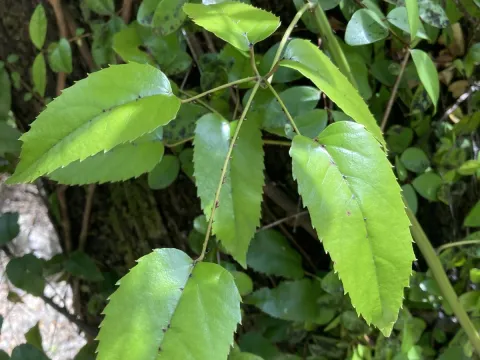
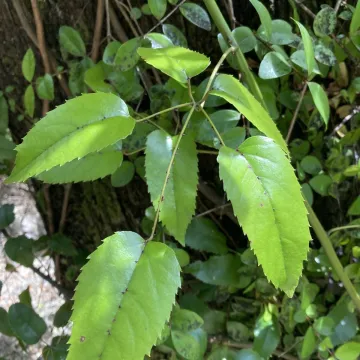
From a botanical standpoint, the plant is characterized by long, slender, trailing stems equipped with recurved prickles, which function as hooks for climbing. The leaves are compound, typically with three to five leaflets, often featuring serrated margins. Small, white to yellowish flowers appear in panicles, followed by small, edible, aggregate fruits.
Cultivation of this vine requires specific horticultural practices, primarily focused on providing structural support. It flourishes in well-drained, humus-rich soil and requires sufficient space to spread. Annual pruning is recommended to manage its aggressive growth habit and to ensure that the plant remains productive and accessible for harvest.
In terms of agricultural and horticultural utility, Rubus cissoides is primarily valued for its role in revegetation projects and as a novelty plant in botanical gardens. While not a commercial crop on a mass scale, it remains a subject of interest for breeders looking to incorporate the hardiness of New Zealand native species into traditional berry cultivation programs.
- Thrives in partial shade to full sun conditions.
- Requires consistent irrigation during dry spells.
- Prone to infestations by aphids and spider mites.
- Benefits from mulching to retain soil moisture.
- Not recommended for small, confined garden spaces.
Photo gallery