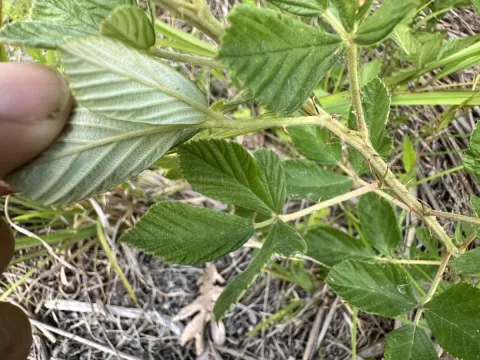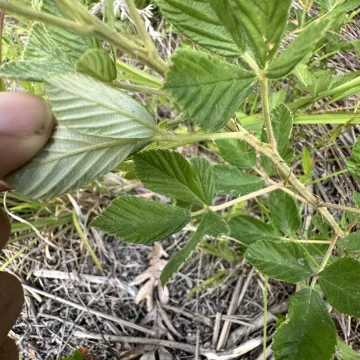
Sand blackberry
Rubus cuneifolius
Description
Sand blackberry (Rubus cuneifolius) is a perennial shrub species belonging to the Rosaceae family. It is a resilient member of the Rubus genus, known for its ability to thrive in poor soils and challenging environmental conditions where other berry crops might struggle to establish themselves effectively.
The plant is native to the southeastern United States. It naturally occupies well-drained, sandy landscapes, coastal plains, and disturbed open areas. Its historical range reflects its adaptation to warm, temperate climates, allowing it to colonize diverse ecological niches ranging from open thickets to the edges of forest clearings.
Botanically, this shrub is characterized by its upright, thorny stems which typically reach heights of one to two meters. The leaves have a distinct cuneate (wedge-shaped) base, which serves as a diagnostic feature. The flowers, appearing in the spring, are white to pale pink, leading to the development of small, flavorful aggregate fruits that turn from red to deep black as they reach full maturity.
Agricultural management of Rubus cuneifolius requires careful site selection. The plant thrives in acidic to neutral sandy loams that provide excellent drainage. While it is naturally drought-tolerant, supplemental irrigation during the fruit-set phase significantly improves yield quantity and berry size. Routine maintenance includes annual pruning of post-fruiting canes to maintain structure and encourage vigorous new growth for the subsequent season.
In terms of economic utility, this species is valued for its hardiness. Beyond its direct use as a source of wild-harvested fruit for jams and preserves, it serves as an important genetic resource in blackberry breeding programs aiming to develop pest-resistant and climate-resilient cultivars. Furthermore, its dense, thorny nature makes it an excellent choice for natural fencing and wildlife habitat restoration projects.
- High tolerance for sandy, nutrient-poor soil
- Minimal susceptibility to common blackberry diseases
- High reproductive potential via both seeds and root suckers
- Valuable genetic source for modern berry breeding
Photo gallery