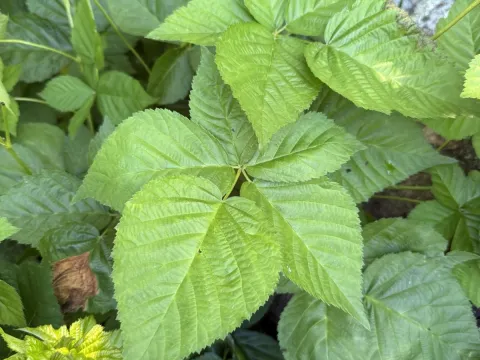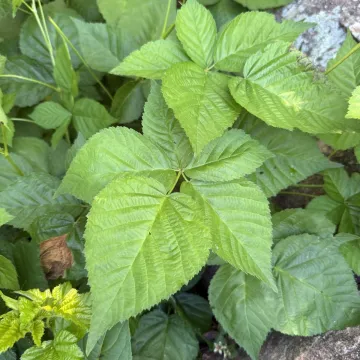
Leafy blackberry
Rubus frondosus
Description
Rubus frondosus, commonly known as the leafy blackberry, is a perennial shrub belonging to the Rosaceae family. It is recognized in agricultural science for its contribution to berry production. The plant develops vigorous canes and foliage, characteristic of wild-type blackberries found in North American ecosystems, which have been studied for their potential in commercial berry farming.
The origin of Rubus frondosus is traced to the temperate regions of North America. It is naturally adapted to forest edges and open fields, where it thrives in diverse soil conditions. In agricultural practice, it is valued for its hardiness, although it requires specific management to optimize berry yield and ensure consistent annual production in commercial orchards.
From a botanical perspective, the plant is distinguished by its complex leaves and a sprawling growth habit. The canes are biennial, requiring systematic pruning to maintain plant health and productivity. The flowers appear in clusters, eventually developing into drupelets that form the aggregate fruit, which matures into a deep, glossy black color when fully ripe.
Cultivation requirements involve a well-drained, nutrient-rich soil profile, preferably with a slightly acidic pH. The plant performs best in full sun, which enhances fruit sweetness. Proper spacing is essential to ensure adequate air circulation, which helps reduce the incidence of fungal pathogens that often affect Rubus species in humid climates.
Economically, this species is used for both fresh market sales and food processing, including the production of preserves, juices, and culinary ingredients. Proper management includes regular fertilization and pest control strategies to mitigate threats such as blackberry mites and various fungal infections. Maintaining proper site hygiene is crucial for ensuring the longevity of the blackberry plantation and the quality of the harvested produce.
Photo gallery