Swamp dewberry
Rubus hispidus
Description
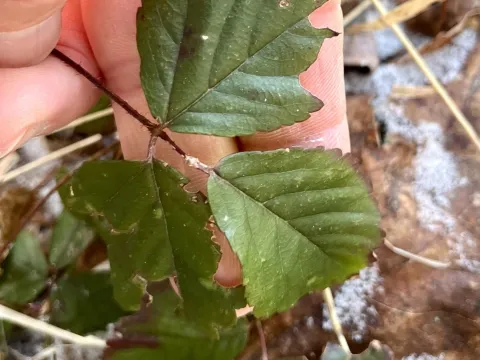
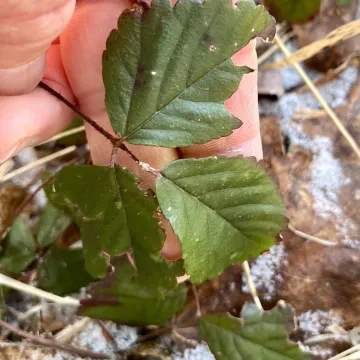
Swamp dewberry (Rubus hispidus) is a perennial trailing shrub belonging to the Rosaceae family. Unlike erect blackberry species, this plant is characterized by its prostrate habit, making it an excellent candidate for ground cover in shaded landscape settings.
The native range of this species is limited to the eastern regions of North America. It is typically found in moist, acidic habitats such as swamps, wet thickets, and pine barrens, where it thrives in soil conditions that might be unsuitable for other cultivated berry crops.
Botanically, the plant features slender, trailing canes covered in fine, bristly hairs. Its leaves are semi-evergreen and leathery, providing greenery through the colder months. The plant produces small, white flowers followed by dark, sour, edible drupelets that are technically berries but are generally not harvested for commercial fruit production due to their sharp flavor.
Cultivation requires specific soil conditions, primarily acidic pH and consistent moisture levels. The plant is exceptionally shade-tolerant, making it a viable choice for understory areas where sunlight is limited. Maintenance mainly involves keeping the area clear of competing invasive weeds and preventing the canes from rooting too densely in undesirable sections of the garden.
- Requires moist, acidic, humus-rich soil.
- Thrives in partial to full shade.
- Spreads through vigorous rooting of the tips of the canes.
In terms of agricultural and ecological application, the swamp dewberry is valued for erosion control on damp slopes and as a native plant species in restoration projects. While not a major economic crop, it is susceptible to typical Rubus pests, such as spider mites, and fungal diseases like orange rust, which requires careful monitoring and proper site ventilation.
Photo gallery