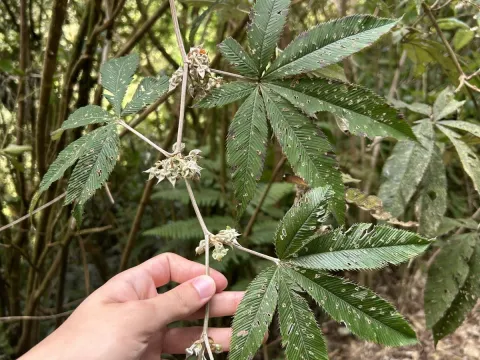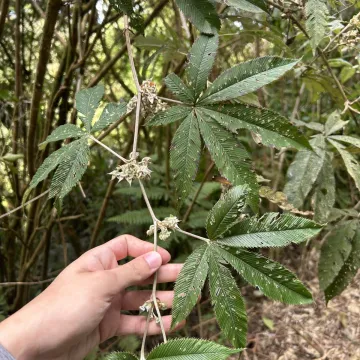

Lined-leaved bramble
Rubus lineatus
Description
Lined-leaved bramble (scientific name: Rubus lineatus) is an evergreen shrub belonging to the Rosaceae family. It is distinct from other species in the Rubus genus due to its unique, deeply ribbed, and pleated foliage, which provides a high ornamental value for specialized gardens and botanical collections.
The plant originates from the high-altitude forests of Southeast Asia, ranging from the Himalayas through Nepal to Southern China. Being a mountain dweller, Rubus lineatus thrives in cool, humid environments with moderate sunlight and consistent moisture levels, which are critical for its survival outside its natural habitat.
Botanically, the species is defined by its long, arching stems and lanceolate leaves that display prominent, parallel veins. This architectural foliage gives the plant its common name and makes it a sought-after species for collectors. Its flowers are generally white or soft pink, leading to the production of small, edible fruits that, while palatable, are primarily harvested for their novelty.
Cultivation requires a sheltered location with partial shade to prevent leaf scorching. The ideal soil should be rich in organic matter, slightly acidic, and exceptionally well-draining. Because this species is not frost-hardy in many regions, it is often grown in containers or greenhouses where the microclimate can be strictly controlled to mimic its native forest floor environment.
Maintenance focuses on preventing common pests like aphids and spider mites, which can be attracted to the soft foliage in enclosed spaces. Proper air circulation is mandatory to prevent fungal issues such as powdery mildew, especially if the humidity is maintained at high levels. With adequate care, Rubus lineatus serves as an elegant, evergreen focal point in any temperate garden setting.
Photo gallery