Mountain blackberry
Rubus montanus
Description
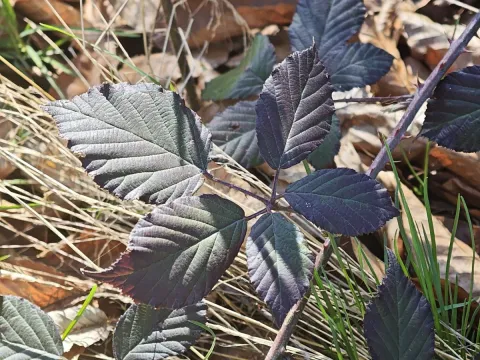
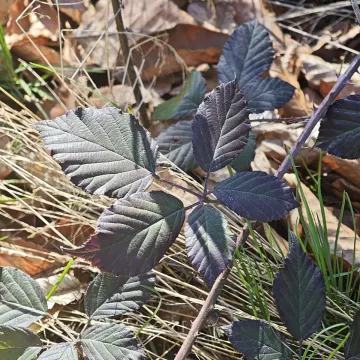
The Mountain blackberry (Rubus montanus) is a perennial shrub belonging to the Rosaceae family. This species is easily distinguished by the distinctive whitish bloom found on its stems and the underside of its leaves, which provides a unique appearance compared to other bramble species within the genus Rubus.
The plant originates from the mountainous regions of Europe, where it has evolved to thrive in cool, damp conditions. Its natural habitat typically consists of forest edges, hillsides, and dense thickets, where it benefits from partially shaded environments that protect the plant from extreme heat and maintain soil moisture levels throughout the growing season.
Botanically, the plant develops biennial canes: during the first year, vegetative growth occurs, and in the second year, the canes produce flowering spurs. The stems are usually armed with sharp, robust prickles, which are an evolutionary defense mechanism. The fruit is an aggregate drupe, darkening to a deep purple or black upon reaching full maturity.
Cultivation requirements for Rubus montanus include well-drained, nutrient-rich soil with a slightly acidic profile. Effective agricultural management involves regular pruning to remove old wood, which promotes the growth of vigorous new canes and reduces the risk of common fungal diseases such as leaf rust or grey mold by improving air circulation within the canopy.
- Exposure: Prefers partial shade or dappled sunlight.
- Watering: Consistent irrigation is crucial during fruit development.
- Soil: Thrives in slightly acidic, organic-rich loams.
- Pruning: Annual removal of spent canes to prevent overcrowding.
Economically, the Mountain blackberry is valued for its fruit, which is rich in antioxidants, vitamins, and minerals. Beyond fresh market production, the berries are widely used in the culinary industry for making preserves, jams, and juices. The hardiness of the plant also makes it a subject of interest for breeding programs aiming to develop disease-resistant berry varieties.
Photo gallery