Thimbleberry
Rubus parviflorus
Description
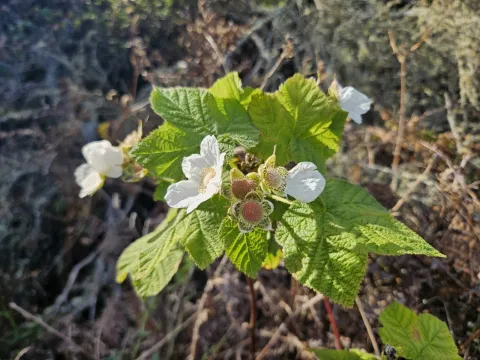
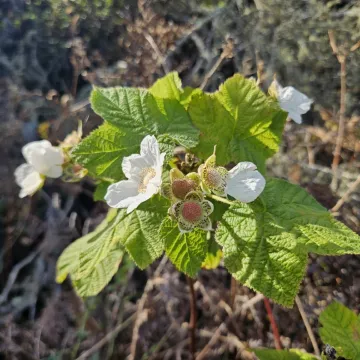
Thimbleberry (Rubus parviflorus) is a deciduous shrub belonging to the Rosaceae family. Native to North America, it is widely recognized for its thornless stems and large, soft, maple-shaped leaves. This species is unique among brambles because it does not produce the sharp prickles typically associated with the Rubus genus.
The natural range of this species extends from Alaska across the mountains of the Western United States to the Great Lakes region. Thimbleberry thrives in cool, moist environments, often colonizing forest edges, clearings, and roadside banks. Its adaptability to various light conditions, including partial shade, makes it a valuable plant for forest gardens.
Botanically, the plant is characterized by its white, five-petaled flowers that bloom from late spring to summer. The fruit is a cluster of drupelets, which ripens to a bright red color. Unlike common raspberries, the thimbleberry fruit is much softer and has a distinctive, delicate flavor, making it highly prized for fresh eating and processing into jams.
Agricultural requirements for Rubus parviflorus include well-drained, nutrient-rich soil and consistent moisture levels. While it is a hardy plant, it benefits from mulch application to retain soil humidity during dry periods. Pruning should focus on removing old, woody canes after the harvest to promote new growth and maintain the health of the shrub.
The plant has various uses, ranging from culinary applications to traditional medicinal practices where the leaves are used for their astringent properties. Common pests include aphids and mites, while root rot can occur in areas with poor drainage. Proper site selection and regular maintenance are essential for maximizing fruit yields and ensuring long-term plant vitality.
- Thornless stems
- Attractive foliage
- Hardy in cold climates
- Edible berries
- Suitable for shade
Photo gallery