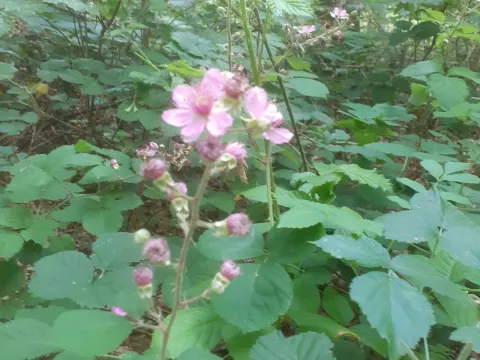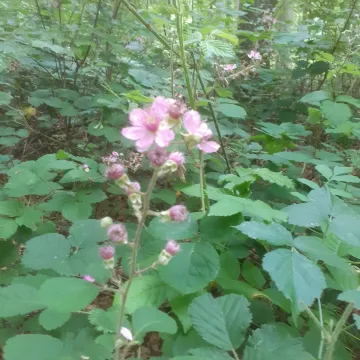

Pyramidal blackberry
Rubus pyramidalis
Description
Pyramidal blackberry (Rubus pyramidalis) is a perennial subshrub belonging to the Rosaceae family. This species is part of the vast Rubus genus, which includes numerous wild and cultivated berry-bearing plants. The crop is characterized by a strong root system and a specific bush habit, which, when properly pruned, takes on a distinct pyramidal or arching shape.
The plant is native to Europe, where it is found in the wild within forest areas and woodland margins. Its cultivation range primarily covers countries with temperate climates, where the plant can adapt to seasonal temperature fluctuations. In agricultural practice, this species is valued for its high plasticity and its ability to grow in various soil conditions.
Botanical features include the presence of prickly canes that can reach significant lengths during the growing season. The leaves have a compound structure with serrated margins, a typical trait for most members of the genus. Flowering occurs in early summer, and the white or pinkish flowers attract pollinators, which promotes high fruit set and consistent yield levels.
Agricultural requirements include ensuring adequate sunlight and protection from strong winds. The crop prefers fertile, moderately moist soils with a neutral or slightly acidic pH. A crucial part of maintenance involves regular pruning of spent canes, as well as the application of organic and mineral fertilizers to maintain stable productivity throughout the season.
- Regular watering during drought periods.
- Mulching around the base to retain soil moisture.
- Winter protection in regions with harsh freezing temperatures.
- Installation of trellises to support fruiting canes.
The economic use of the species is focused on berry production, which offers a rich nutritional profile and pleasant flavor. The fruits are suitable for fresh consumption as well as industrial processing into jams, juices, and wines. Typical diseases include anthracnose and powdery mildew, while common pests include aphids, raspberry weevils, and spider mites.
Photo gallery