Sprengel's bramble
Rubus sprengelii
Description
Sprengel's bramble (lat. Rubus sprengelii) is a perennial shrub belonging to the Rosaceae family. As a complex species within the blackberry genus, it is primarily recognized for its ecological role in European landscapes and its potential as a source of genetic diversity for modern berry crop breeding programs.
The native range of this plant encompasses much of Central and Western Europe. It is commonly found in woodland edges, hedgerows, and neglected rural areas. Its ability to colonize disturbed ground makes it a robust species, often forming dense thickets that provide shelter for local wildlife while producing fruit for human and avian consumption.
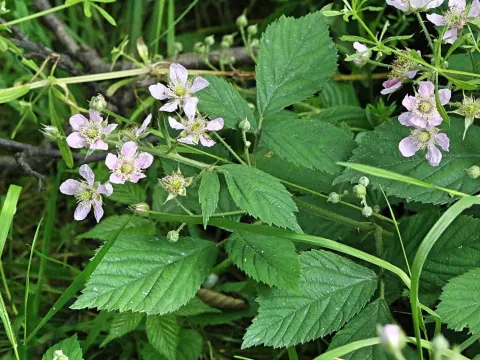
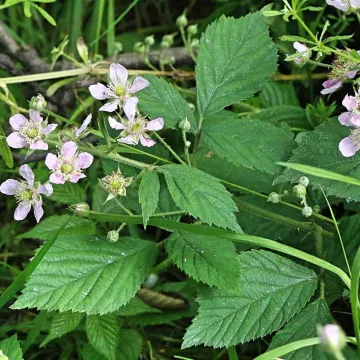
The botanical structure of the plant consists of arched, biennial stems that are heavily armed with recurved prickles. The leaves are palmately compound and typically feature serrated margins. During the flowering period, the plant produces clusters of pinkish-white blossoms, followed by the development of aggregate drupelets that turn deep black upon reaching maturity.
In terms of agricultural requirements, Sprengel's bramble thrives in well-drained, fertile soils ranging from loamy to sandy compositions. It prefers sunny locations but shows significant tolerance to partial shade. Standard horticultural management practices for this species focus on pruning to maintain stem vigor and controlling the aggressive spread of the root system to prevent overgrowth in managed environments.
Economically, the species is valued for its wild berries, which are high in antioxidants and dietary fiber. Common agricultural challenges include managing pest populations such as aphids and spider mites, as well as preventing fungal infections like leaf spot and cane blight. Regular monitoring and integrated pest management (IPM) strategies are essential to ensure healthy growth and fruit yield.
Photo gallery