Creeping Ruellia
Ruellia squarrosa
Description
Creeping Ruellia (Ruellia squarrosa) is a herbaceous perennial plant belonging to the Acanthaceae family. While it is primarily recognized for its aesthetic value in landscaping and interior plant collections, it represents a significant botanical specimen within its native habitat and for professional horticultural applications.
The species originates from the tropical regions of South America, specifically Brazil. Its natural distribution is largely concentrated in tropical environments, while its cultivation range has expanded globally to include subtropical gardens, conservatories, and indoor residential spaces where environmental conditions can be controlled to mimic its native climate.
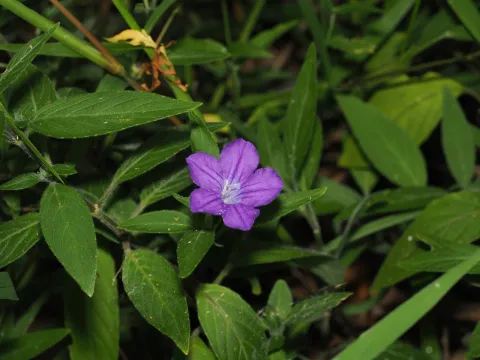
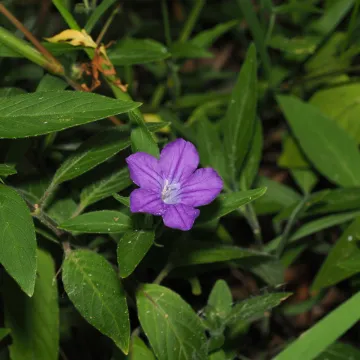
Botanically, the plant is characterized by its trailing or erect pubescent stems and opposite, oblong green leaves. One of its most distinctive features is the presence of funnel-shaped, violet-colored flowers that emerge periodically throughout the growing season, providing significant ornamental appeal in both outdoor and greenhouse settings.
Agronomic requirements for this culture include well-draining, nutrient-rich soil and a climate characterized by consistent warmth, ideally between 20°C and 25°C. Proper cultivation techniques involve providing bright, filtered light and moderate water, ensuring the soil remains moist but never waterlogged, as excessive irrigation can lead to root degradation.
Economic and ornamental use of the plant is centered on its role as a decorative perennial. Pests such as spider mites and aphids are the primary threats, particularly in low-humidity environments. To ensure health, cultivators must monitor for signs of infestation and maintain adequate air circulation, which helps in preventing common fungal pathogens and supporting overall plant vigor.
Photo gallery