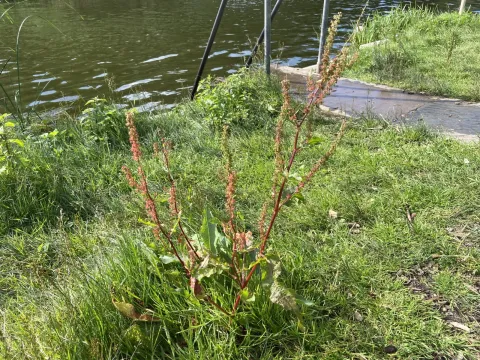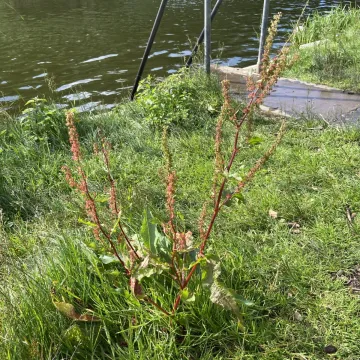
Sharp dock
Rumex acutus
Description
Sharp dock (Rumex acutus) is a perennial herbaceous plant belonging to the Polygonaceae family. Within agricultural systems, this plant is recognized for its robust growth habit and potential as a valuable component in forage production, contributing to the biodiversity of pastures and providing essential nutrients in hay or silage mixtures.
The native range of the species spans the temperate regions of Eurasia, where it thrives in moist environments such as river floodplains, wet meadows, and riparian zones. The plant is highly adaptable to various soil types, although it performs best in fertile, moisture-retentive loams. Its natural ability to colonize such areas makes it an important species for ecological restoration and soil stabilization projects.
Botanically, sharp dock is distinguished by its strong taproot and upright stems that can reach heights of up to 1.2 meters. Its leaves are characteristically acute and lanceolate, facilitating efficient light capture in dense canopy conditions. The plant produces dense, paniculate inflorescences containing small flowers, which appear during the summer months and produce numerous seeds that ensure the species' survival and spread.
Agronomic requirements for cultivating this species focus primarily on water management and soil fertility. It thrives in well-drained but consistently moist conditions and benefits significantly from nitrogen-rich soil amendments. Effective crop management includes proper harvesting schedules to maintain the nutritional quality of the foliage and prevent the plant from becoming too lignified, which can reduce its palatability for livestock.
- Requires consistent soil moisture for maximum yield.
- Responds well to balanced nitrogen and potassium fertilization.
- Best harvested before seed set to ensure foliage quality.
- Resistant to cold but sensitive to prolonged summer drought.
In terms of хозяйственное (economic) utility, sharp dock is mainly utilized as part of green forage or fermented feed for ruminants. It is also valued for its ecological role in meadow ecosystems. Growers must remain vigilant against pests like the dock beetle and various aphids, while also managing potential fungal infections such as rust, particularly in areas with poor air circulation or excessive leaf wetness.
Photo gallery