Horned dock
Rumex bucephalophorus
Description
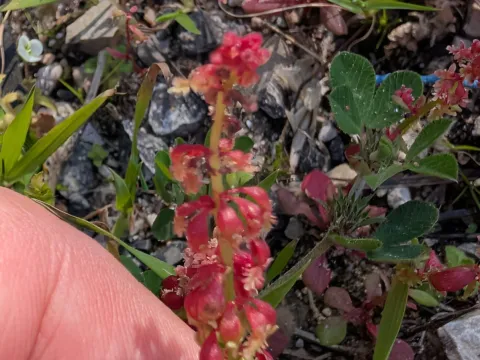
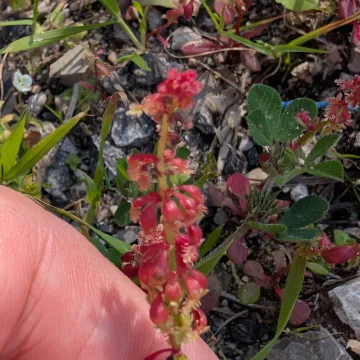
Horned dock (Rumex bucephalophorus) is an annual herbaceous plant belonging to the Polygonaceae family. It is distinct for its unique fruit morphology, which features horned, anchor-like appendages, earning it the scientific name that references the shape of an ox's head. This species is an interesting model for studying botanical adaptation in challenging environments.
The plant is native to the Mediterranean region, where it thrives in rocky soils, pastures, and open field margins. Its distribution area spans across Southern Europe, North Africa, and parts of Western Asia. Being a Mediterranean plant, it is well-adapted to hot, dry summers and mild, wet winters, making it a natural choice for research into drought-resilient plant species.
Botanically, Horned dock is characterized by its low-growing habit, typically reaching a height of 10–30 cm. It produces small, lanceolate leaves and a deep taproot system designed to extract moisture from arid soil profiles. The reproductive strategy of this plant involves the production of distinct achenes that are easily dispersed by wind or physical contact due to their spiky structure.
Regarding cultivation, the plant prefers well-drained, nutrient-poor, or sandy soils with full sun exposure. It is highly sensitive to waterlogging, so soil aeration is essential for optimal growth. Agricultural management involves minimal intervention, primarily focusing on weed suppression during the early stages of establishment to ensure the plant can fully develop its root system before the dry season commences.
While not a primary commercial crop, Horned dock holds value in ecological restoration and as a genetic resource. Its ability to colonize degraded lands makes it useful for soil stabilization in Mediterranean climates. Regarding health, farmers should be aware of potential infestations of aphids and leaf-eating beetles, which are common pests for many members of the Polygonaceae family. Fungal diseases, such as leaf spot, may occur if the plant is grown in overly humid conditions.
Photo gallery