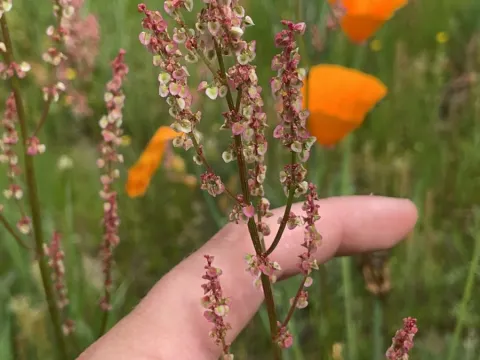

Heartwing sorrel
Rumex hastatulus
Description
Heartwing sorrel (Rumex hastatulus) is a perennial herbaceous plant belonging to the Polygonaceae family. Unlike common culinary sorrel varieties, this species is specifically adapted to specialized ecological habitats, demonstrating unique biological strategies for survival in harsh conditions.
The native distribution of this plant is primarily in North America, where it thrives in sandy soils, fields, and open areas. Its geographical range reflects its evolutionary adaptation to well-drained, nutrient-poor landscapes where it acts as a hardy pioneer species capable of establishing cover in otherwise challenging terrains.
Botanically, Rumex hastatulus is distinguished by its hastate (spear-shaped) basal leaves and a distinct reproductive mechanism known as dioecy, where individual plants are either male or female. This sexual dimorphism allows for cross-pollination and contributes to the genetic diversity of populations, helping the species adapt to localized environmental stressors.
Cultivation requirements for this species are centered on well-drained, sandy, or loamy soil types. It is notably drought-tolerant and does not require intensive irrigation or heavy fertilization. Proper agrotechnics involve maintaining low-density planting to ensure adequate airflow and sunlight penetration, which helps prevent the build-up of moisture around the foliage.
In terms of agricultural utility, Heartwing sorrel is recognized for its role in soil stabilization and erosion control. Due to its deep root system, it is often utilized in ecological restoration projects to prevent soil degradation in arid or semi-arid environments. Furthermore, it serves as a subject for scientific research concerning the genetics of plant sex determination.
- Excellent drought resistance
- Deep taproot system for stabilization
- Prefers sandy and nutrient-poor substrates
- Distinctive hastate leaf morphology
The culture is susceptible to common pests associated with the Polygonaceae family, including various leaf beetles and aphids. Pathogenic threats primarily involve fungal infections such as leaf rusts and mildew, which usually manifest under conditions of poor ventilation or excess humidity. Implementing appropriate field management and spacing is the primary method for disease prevention.
Photo gallery