
Canaigre dock
Rumex hymenosepalus
Description
Canaigre dock (Rumex hymenosepalus) is a perennial herbaceous plant belonging to the Polygonaceae family. It is distinct among the Rumex species for its fleshy, tuberous roots that contain significant quantities of tannins, which have historically been extracted for industrial use.
The plant is native to the arid regions of the southwestern United States and northern Mexico. It has evolved to thrive in desert and semi-desert environments, demonstrating remarkable resilience to high temperatures and prolonged periods of drought. Its native range is characterized by sandy substrates where deep root penetration is easily facilitated.
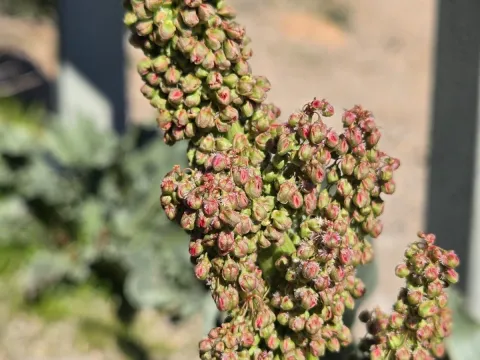
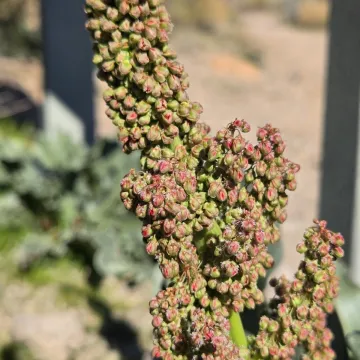
Botanically, Rumex hymenosepalus is defined by its substantial rootstock, which resembles a sweet potato or dahlia root in shape and texture. The foliage grows in a basal rosette, characterized by large, succulent leaves. During the reproductive phase, it develops tall, erect stems with panicles of small, inconspicuous flowers. The plant completes its growth cycle during the cooler, wetter months to escape extreme summer heat.
Cultivation of canaigre dock requires specific environmental parameters, primarily loose, well-draining sandy soils. Agronomists emphasize the importance of deep soil preparation to allow the tuberous roots to expand properly. Because the plant is highly susceptible to root rot, precise water management is crucial, and it is usually grown in areas where rainfall provides sufficient moisture without causing soil saturation.
In terms of economic utility, the plant has been primarily used as a source of vegetable tanning agents for the leather industry. The roots are harvested, dried, and processed to extract high-quality tannins. While modern industrial processes often prefer synthetic chemicals, the plant remains an interesting object for sustainable agriculture, particularly in marginal arid lands that cannot support traditional field crops.
- High drought tolerance
- Rich in vegetable tannins
- Tuberous root system
- Sensitivity to soil waterlogging
Photo gallery