Spiny emex
Rumex hypogaeus
Description
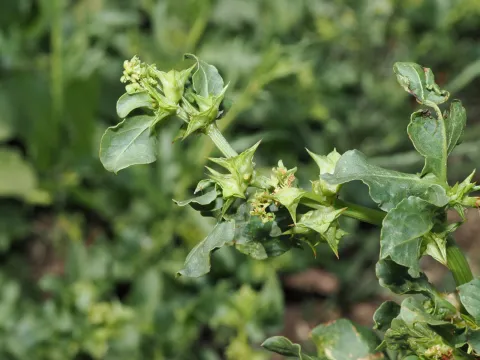
Spiny emex (Rumex hypogaeus) is an annual herbaceous plant belonging to the Polygonaceae (buckwheat) family. In agronomic terms, it is primarily recognized as a problematic invasive weed that poses a significant threat to agriculture, often infesting cereal crops and pasture lands across various parts of the globe.
The plant originates from Southern Africa and the Mediterranean basin. Due to its high reproductive capacity and ability to tolerate diverse environmental conditions, it has successfully established itself as an invasive species in Australia, parts of North America, and South America. It thrives particularly well in disturbed landscapes, roadsides, and cultivated fields where competition is manageable.
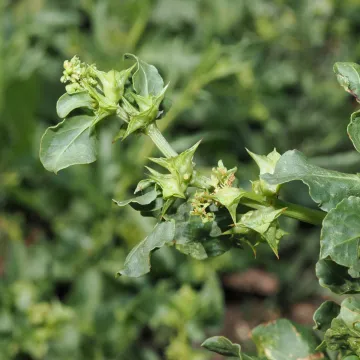
Botanically, the spiny emex is characterized by its prostrate to semi-erect stems that can grow up to 60 cm in length. The most distinct feature is its spiny, woody fruit, which acts as a highly effective dispersal mechanism. The foliage typically consists of alternate, ovate to triangular leaves with characteristic ochreae at the nodes, typical of the buckwheat family.
From an agrotechnical perspective, this plant is highly adapted to arid and semi-arid environments. It prefers well-drained, light-textured soils such as sandy loams but shows remarkable resilience across varying soil pH levels. Successful management requires a multi-pronged approach, including timely mechanical cultivation, crop rotation, and the strategic application of herbicides during the early rosette stage to prevent fruit development.
The agricultural impact is largely detrimental, as the spiny fruits can contaminate harvested grain and damage farm machinery or equipment. Furthermore, the thorns present a physical hazard to livestock, causing injury to mouths and hooves. While it is rarely cultivated for any purpose, research continues into biological control agents, such as specific weevils, to combat its proliferation in agricultural regions.
Photo gallery