Persicaria-leaved dock
Rumex persicarioides
Description
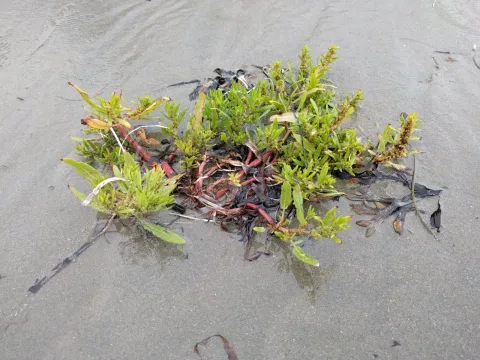
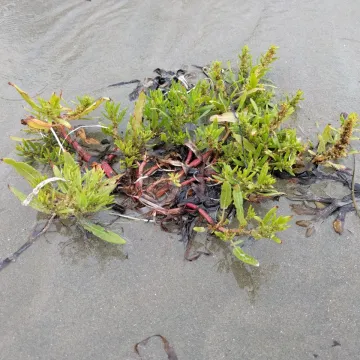
Persicaria-leaved dock (Rumex persicarioides) is an annual herbaceous plant belonging to the Polygonaceae family. In agronomy, it is recognized primarily as a weed species that thrives in damp, riparian environments, often impacting the biodiversity and yield of agricultural lands located in low-lying areas.
The native distribution of this species covers temperate regions of the Northern Hemisphere. It is commonly found in wetlands, on sandy stream banks, and in periodically flooded fields. Its ability to tolerate high moisture levels makes it a resilient plant that can rapidly colonize disturbed soils, complicating traditional field maintenance.
Botanically, Rumex persicarioides is characterized by a stem that typically grows from 10 to 50 cm tall, often exhibiting a reddish or greenish hue. The leaves are narrowly lanceolate, and the flowers are organized into dense, interrupted clusters in the axils of the leaves. The fruit consists of an achene enclosed by enlarged inner tepals, which are vital for seed dispersal in aquatic environments.
Agronomic requirements for this species revolve around moisture availability; it favors nitrogen-rich, moist soils. Management strategies include improving soil drainage to make the environment less hospitable to the dock, mechanical removal through intensive cultivation before the seed set stage, and the application of pre-emergent or post-emergent herbicides tailored for the specific crop rotation.
The economic utility of the species is largely non-existent in modern commercial agriculture, though it contributes to soil stabilization in wild riparian zones. Common pests include various leaf-feeding insects and curculionid beetles. Pathologically, it is susceptible to rust fungi and various leaf spots, which are common manifestations of its adaptation to high-humidity habitats.
- Family: Polygonaceae
- Life Cycle: Annual
- Flower type: Whorled clusters
- Preferred Habitat: Wet, sandy soil
- Agricultural status: Invasive weed
Photo gallery