Field dock
Rumex pseudonatronatus
Description
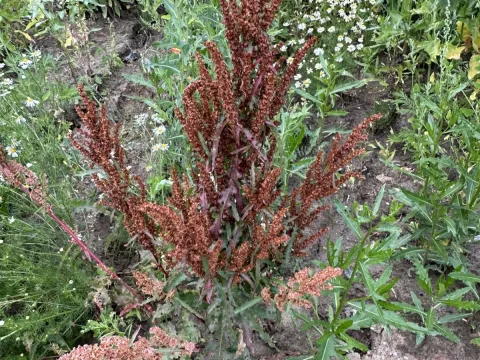
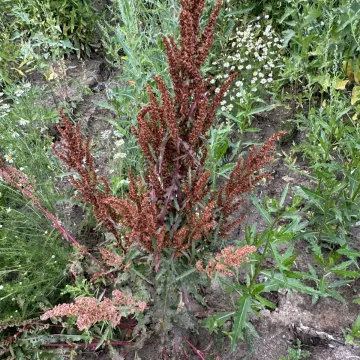
Field dock (Rumex pseudonatronatus) is a perennial herbaceous plant belonging to the Polygonaceae family. It is a resilient species recognized for its adaptability to challenging environments, often acting as a significant component in natural grasslands and pasture ecosystems across Eurasia.
The origin and natural range of this species are rooted in the steppe and meadow regions where it evolved in saline or damp environments. Its ability to colonize marginal lands has made it a familiar sight in agricultural landscapes, where it serves as a persistent, albeit sometimes invasive, member of the meadow vegetation.
Botanically, the plant features a deep taproot system, which is instrumental in its survival during water-stressed periods. The stems are sturdy and tall, often reaching significant heights during the reproductive stage. Its leaves are typically lanceolate, and the inflorescence consists of dense racemes, a morphological trait that contributes to its successful seed dispersal mechanism.
In terms of climate and soil requirements, this species is highly tolerant. It thrives in well-lit areas and displays a unique capability to tolerate high salt concentrations in the soil, which differentiates it from more sensitive dock species. Agricultural management involves regular monitoring of its distribution, as it can be competitive in degraded soils where other crops might struggle to establish.
Economically, the plant is primarily utilized as a source of biomass for livestock fodder. While it provides nutrients in natural hay meadows, it must be managed to prevent it from outcompeting more desirable forage species. Common health issues include susceptibility to rust and leaf spot diseases, alongside pests such as dock leaf beetles and aphids, which can impact biomass quality if left unmanaged.
- Notable salt tolerance in saline habitats.
- Strong perennial growth habit and resilience.
- Effective biomass production in marginal areas.
- Deep root structure aiding in soil stabilization.
Photo gallery