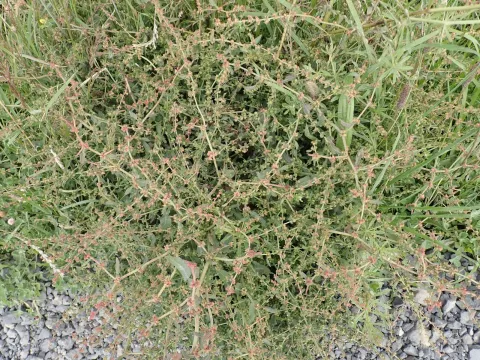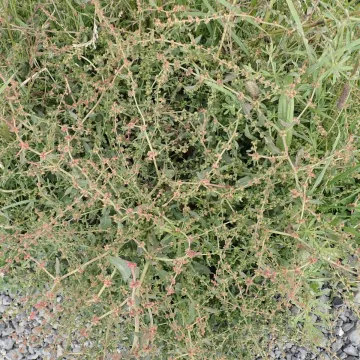
Fiddle dock
Rumex pulcher
Description
Fiddle dock (Rumex pulcher) is a perennial herbaceous plant belonging to the Polygonaceae family. In agricultural settings, it is often classified as a weed that colonizes compacted pastures, roadsides, and waste areas. It is distinctively recognized by its fiddle-shaped basal leaves, which give the plant its common English name.
Native to the Mediterranean region and parts of Western Asia, the plant has established a global presence in temperate and subtropical climates. It is highly adapted to disturbed environments and thrives in soils that are heavy, clay-rich, or show signs of nutrient imbalances and compaction. Its ability to tolerate low-oxygen soil conditions provides it with a competitive advantage.
Botanically, Rumex pulcher possesses a deep, robust taproot that aids in surviving periods of drought. The flowering stems are characterized by zigzag growth patterns and produce fruit enclosed in distinctively spiny, toothed valves. These structures aid in dispersal by attaching to the fur of animals or being transported through water runoff in agricultural landscapes.
Effective agronomic management requires a combination of mechanical and cultural practices. Regular mowing before seed set is critical to prevent population expansion. Improving soil drainage and structure through subsoiling can reduce the competitiveness of fiddle dock, as the plant prefers compacted soil environments. Herbicides labeled for broadleaf weeds in pastures are effective if applied during the rosette stage.
From a хозяйственное utilization perspective, it is rarely cultivated intentionally. While young foliage can serve as supplemental forage, it is generally considered low-quality due to the presence of oxalic acid, which can be detrimental to livestock if consumed in excess. Common pests include various leaf-feeding insects, while fungal pathogens like rusts and leaf spots are prevalent in humid conditions.
Photo gallery