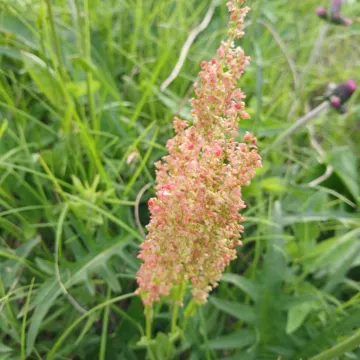

Pyramid dock
Rumex thyrsiflorus
Description
Pyramid dock (Latin Rumex thyrsiflorus) is a perennial herbaceous plant belonging to the Polygonaceae (buckwheat) family. This species is known for its distinct inflorescence structure, which forms a dense, pyramid-shaped panicle, distinguishing it from other common dock species.
Native to temperate Eurasia, the plant has a wide distribution range, thriving in diverse environments from meadows and roadsides to steppes. Its ability to colonize various habitats is due to its hardy nature and efficient nutrient uptake strategies, making it a resilient component of local ecosystems.
Botanically, it features a robust taproot system that provides high drought tolerance. The basal leaves are typically arrow-shaped or lanceolate, while the aerial stems grow quite tall, reaching over one meter. The characteristic feature is the terminal inflorescence, which supports numerous small flowers that transition into dry, winged fruits.
Cultivation requirements for this plant are relatively modest. It prefers fertile, well-drained loamy soils but can adapt to poorer ground conditions. Agronomic management involves site preparation, adequate spacing for root development, and periodic maintenance to prevent excessive seed dispersal, as the plant spreads readily through its abundant fruit production.
Economically, it is recognized for its medicinal potential, as parts of the plant contain compounds beneficial for therapeutic use. Additionally, in some agricultural systems, it serves as a supplement in pasture forage. Common challenges in managing this crop include infestations by the dock leaf beetle and susceptibility to fungal diseases such as leaf rust, which can impact foliage quality if left unchecked.
Photo gallery