Corsican rue
Ruta corsica
Description
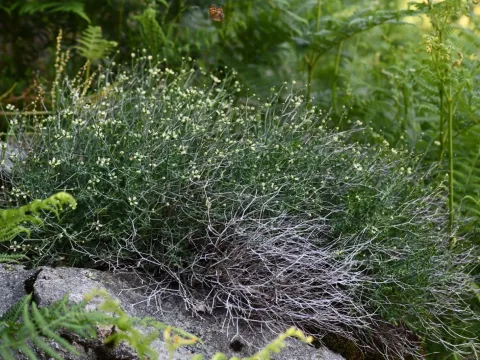
Corsican rue (Ruta corsica) is a perennial evergreen subshrub belonging to the Rutaceae family. It is an endemic species native to the islands of Corsica and Sardinia, typically found in rocky habitats and calcareous mountain slopes. This plant is distinct from common rue due to its lower growth habit and specific chemical profile, making it a point of interest for both collectors and researchers.
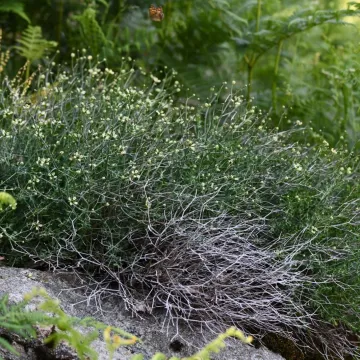
Botanically, the plant features finely divided, glaucous leaves that are highly aromatic. It maintains a compact, dense form usually reaching heights of 30 to 40 centimeters. The plant produces small, bright yellow flowers arranged in terminal corymbs during the summer season. The root system is resilient and evolved to thrive in nutrient-poor, rocky substrates, providing excellent drought tolerance once established.
The cultivation of Ruta corsica requires a location that mimics its natural environment, specifically emphasizing full sun exposure and exceptional soil drainage. It prefers alkaline or neutral, gritty soils that do not retain excess water. In colder climates, the plant should be protected from harsh frosts or cultivated in containers that can be moved indoors during the winter, as its roots are susceptible to rotting in waterlogged, cold conditions.
Agronomic practices for this species are minimal but crucial. Maintenance involves pruning after the flowering period to maintain a tidy appearance and prevent woody overgrowth. Propagation is achieved through seeds or stem cuttings. Growers should avoid heavy fertilization, as high levels of nitrogen can reduce the plant's natural hardiness and its concentration of essential oils, making it more prone to pest infestations.
The primary economic uses of Corsican rue include landscaping in rock gardens and ornamental rockeries, as well as being a specialized ingredient for the perfume and fragrance industry. Due to its potent aromatic properties, it is also studied for its biological activity. It is important to handle this plant with care, as its foliage contains furocoumarins, which can cause skin irritation or phototoxic reactions upon contact in direct sunlight.
- Family: Rutaceae
- Plant type: Perennial subshrub
- Hardiness: Mediterranean climate
- Soil requirements: Well-drained, alkaline
- Key warning: Handle with gloves (phototoxic)
Photo gallery