Knotted pearlwort
Sagina nodosa
Description
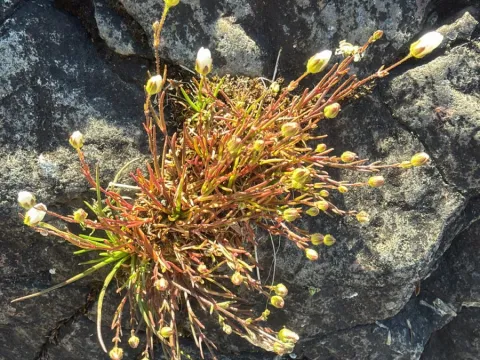
Knotted pearlwort (Sagina nodosa) is a perennial herbaceous plant belonging to the Caryophyllaceae family. It is widely recognized in specialized horticulture for its dense, moss-like growth habit, which makes it a sought-after species for groundcover applications in landscaping and rock gardening.
The plant originates from the temperate regions of the Northern Hemisphere, with an extensive range across Europe and North America. It is naturally found in moist, sandy environments, including coastal areas, marshes, and damp meadows, which dictates its preference for specific moisture-rich habitats.
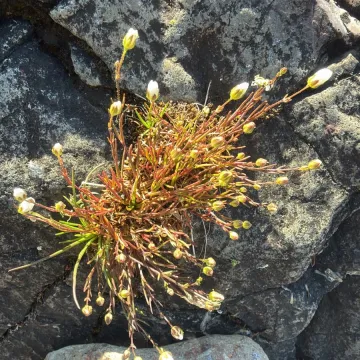
Botanically, it features slender, awl-shaped leaves and stems that exhibit distinct swollen nodes, giving the plant its common name. During the blooming season, it produces small, white, five-petaled flowers. The overall structure is low-growing, typically forming a mat that effectively suppresses weeds if established correctly.
For successful cultivation, Sagina nodosa requires a consistent moisture supply and well-draining, sandy soil. It does not tolerate prolonged drought, making supplemental irrigation essential in drier climates. While it can tolerate full sun in cool regions, it performs best in partial shade to prevent heat-related stress.
In terms of agricultural and horticultural use, this species is primarily used for ornamental purposes, such as creating soft textures in garden designs. Maintenance is relatively simple, but care should be taken to avoid fungal pathogens like root rot, which may occur if the soil remains waterlogged for extended periods.
Photo gallery