Bulltongue arrowhead
Sagittaria lancifolia
Description
Bulltongue arrowhead (Sagittaria lancifolia) is a robust perennial aquatic plant belonging to the Alismataceae family. Known for its elegant, lance-shaped leaves and reliable performance in wetland settings, it is a staple for gardeners looking to enhance aquatic landscapes and natural water filtration systems.
The plant is native to the tropical and subtropical regions of the Americas, thriving naturally in marshes, swampy areas, and along the margins of slow-moving bodies of water. Its ability to grow in saturated soils has made it a preferred choice for environmental restoration projects and ornamental water gardens globally.
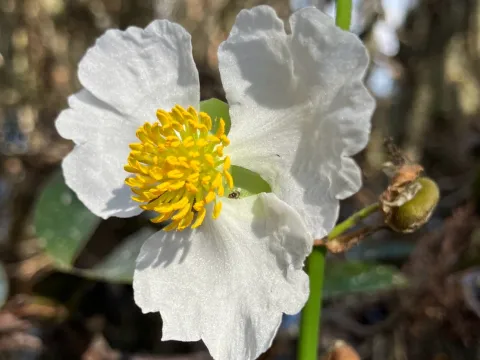
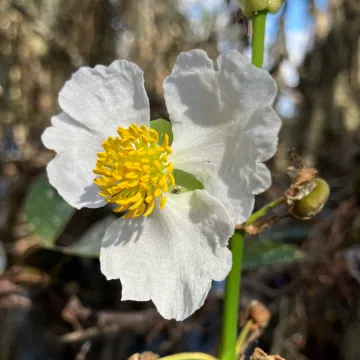
Botanically, the species is defined by its tall, erect petioles supporting long, leathery leaves that can reach significant heights above the water surface. It spreads via underground rhizomes, establishing dense clusters over time. The inflorescence consists of delicate, three-petaled white flowers arranged in whorls on stalks that rise above the foliage during the growing season.
Successful cultivation requires specific environmental conditions. It performs best in nutrient-rich soils such as clay or heavy loam. While it is quite adaptable, the plant prefers water depths ranging from 4 to 12 inches. It requires full sunlight to partial shade and is generally intolerant of freezing temperatures, necessitating winter protection in colder zones.
In terms of management and protection, the plant is relatively resilient. However, potential issues include aphid infestations on the foliage or spider mites in dryer conditions. Preventive measures include ensuring consistent water levels and periodic inspection for fungal leaf spots, which can occur if the water quality is poor or there is insufficient water circulation.
Photo gallery